
| Parameter | Specification | Standard/Method |
| Botanical Name | Boswellia serrata | Taxonomy |
| Common Name | Indian Frankincense / Olibanum | Vernacular |
| Origin | India | Sourcing |
| Extraction Method | Steam Distillation | Industrial |
| Main Constituent | Alpha-thujene (35% – 55%) | GC-MS Analysis |
| Refractive Index | 1.455 – 1.475 @ 20°C | ISO 280 |
| Specific Gravity | 0.835 – 0.865 @ 25°C | ISO 279 |
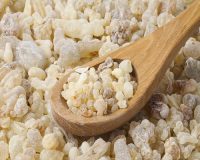
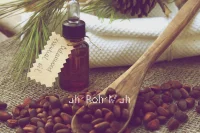
Boswellia serrata is one of the oldest known herbs in the Ayurvedic tradition. While African Frankincense (Carterii or Sacra) was historically traded toward the West, the Indian variety remained a staple of Eastern wellness for thousands of years. The tree thrives in the dry, mountainous regions of Central and Northern India. It produces a sticky oleoresin when the bark is “tapped,” which is then collected and sorted before undergoing distillation.
We source our Frankincense from regions where sustainable harvesting is a priority. The trees are only tapped during specific seasons to ensure they have enough time to heal and regenerate. This not only protects the ecosystem but also ensures that the resin contains a higher concentration of the terpenes we look for in a high-quality oil.
Oil Summary: Serrata Frankincense Essential Oil Indian – is known as a common ingredient in Ayurveda: one of the oldest healing practices in the world. It grows freely in India, parts of North Africa, and Central Asia. Among the species of Boswellia, oil extracts from B. Serrata are the most commonly used for medicine and have been broadly studied for use in treating arthritis, joint pain, bronchial asthma, and ulcerative colitis. They’re also considered a better alternative to synthetic NSAID drugs. Serrata Frankincense Essential Oil is renowned as one of the most valuable and precious essential oils. It has gained a solid reputation in aromatherapy, particularly for its strength in relieving chronic stress, anxiety, and depression. Frankincense is distinguished among medical practitioners as an effective immunomodulator. It can strengthen a weak immune system and prevent illness from creeping in, while also relaxing unpleasantly active immune systems that overcompensate with severe allergic reactions every time a foreign substance enters the body. When inhaled, applied to the skin, or used internally, the regulatory effects of Frankincense can help to cure acute and chronic autoimmune disorders, such as arthritis, ulcerative colitis, bronchial asthma, and Crohn’s disease. Frankincense is also commonly used in bath water to decrease muscle aches and remedy inflammations caused by infection or injury. 
Odor and Appearance :When fresh, frankincense essential oil is light yellow, with a mildly sweet, woody, spicy and citrusy aroma.
Country of Origin: India
Botanical Name: Boswellia Serrata
Contraindication: Frankincense is very safe, especially when replacing prescription medications. It is among the friendliest oils to use, both topically and internally. That said, ingesting large quantities at once, can result in the oil becoming toxic. Some people have also reported adverse reactions to Frankincense, including mild skin rashes, and digestive problems like stomachaches and nausea. The blood thinning effects of Frankincense can be problematic to anyone with issues related to blood clotting, by encouraging bleeding and undermining anticoagulant medications.
The chemical “fingerprint” of Indian Frankincense Oil is dominated by Alpha-thujene. In many batches, this single compound makes up nearly half of the oil’s volume. Alpha-thujene is a monoterpene that gives the oil its characteristic sharp, peppery scent. Alongside it, Alpha-pinene provides a fresh, balsamic undertone. Together, these compounds define the oil’s ability to interact with the body’s inflammatory response.
While all frankincense oils have some level of anti-inflammatory benefit, Boswellia serrata is the variety most frequently cited in clinical studies regarding joint comfort and mobility. The specific ratio of monoterpenes in the steam distilled oil makes it highly effective when used in massage blends for those dealing with physical overexertion or age-related joint stiffness.
| Feature | Serrata (Indian) | Carterii (African) | Sacra (Omani) |
| Primary Aroma | Spicy, Woody, Sharp | Sweet, Citrusy, Balsamic | Intense, Honey-like, Deep |
| Key Compound | Alpha-thujene | Alpha-pinene / Limonene | Alpha-pinene (High) |
| Best For | Joints & Inflammation | Skin Care & Meditation | Spiritual / High-End Perfumery |
| Cost | Most Economical | Moderate | Premium |
For those using Frankincense for physical support, topical application is the most direct route. Because the oil is concentrated, it should be diluted in a carrier oil like Castor or Jojoba. The Alpha-thujene penetrates the skin to help soothe the targeted area.
In professional massage therapy, Serrata Frankincense Oil is often blended with other “warm” oils like Ginger or Black Pepper. This combination helps increase local circulation and provides a grounding, earthy scent that aids in relaxation while the chemistry works on the muscles.
While Serrata is “physical,” it is still a powerful tool for the mind. Diffusing this oil helps create a focused, grounded environment. It is less “airy” than the African varieties, making it better for those who prefer an earthy, peppery scent during meditation or yoga.
Serrata blends exceptionally well with citrus oils (like Bergamot) to brighten its spicy notes, or with woody oils (like Cedarwood) to deepen its grounding effects.
| Application | Dilution Rate | Drops per 1oz Carrier Oil |
| Sensitive Skin | 0.5% | 3 Drops |
| Daily Body Massage | 1% | 6 Drops |
| Targeted Joint Rub | 3% | 18 Drops |
| Aromatic Diffusion | Neat | 5-10 Drops in Diffuser |
Boswellia serrata is generally non-irritating, but because it is high in monoterpenes, it can oxidize over time. Always dilute before applying to the skin to minimize the risk of sensitization.
Frankincense oil is sensitive to light and heat. To prevent the Alpha-thujene from breaking down into skin-irritating byproducts, keep the oil in a dark glass bottle in a cool, dry place. A tightly sealed cap is essential to prevent oxidation.
1. What is the difference between Frankincense Serrata and Carterii?
Serrata (Indian) is higher in Alpha-thujene and is typically used for joint and muscle support. Carterii (African) is higher in Alpha-pinene and is often preferred for skincare and spiritual use.
2. Is this oil safe to apply directly to the skin?
We recommend diluting it in a carrier oil (like Jojoba or Fractionated Coconut Oil) at a 1-3% ratio to avoid any potential skin sensitivity.
3. Can I use Serrata Frankincense for meditation?
Yes. It has a very grounding, earthy, and spicy aroma that is excellent for focus and centering during yoga or meditation.
4. Does this oil contain Boswellic Acids?
Steam-distilled essential oils generally do not contain Boswellic acids, as those molecules are too heavy to come over in the steam. Those are found in the resin extracts. The oil’s benefits come from its high terpene content.
5. Is your Frankincense Oil food-grade?
Our oil is 100% pure and natural. While Boswellia serrata is used in traditional medicine, we sell our oil for aromatherapy and topical use. Always consult a professional before internal use.
6. Why is Serrata usually cheaper than Sacra?
Serrata trees are more abundant and the resin is easier to harvest in large quantities in India, making it a more cost-effective option for bulk use.
7. What does “Olibanum” mean?
Olibanum is simply another name for Frankincense, derived from the Arabic “al-lubán,” referring to the milky sap of the tree.
8. Can I use this in a diffuser?
Yes. It is a thin oil that diffuses easily and blends well with citrus, spice, and wood oils.
9. How do I know if the oil is pure?
We perform GC-MS testing on every batch to verify the Alpha-thujene levels and ensure there are no synthetic additives or fillers.
10. Do you offer wholesale pricing for manufacturers?
Yes. We provide wholesale Indian Frankincense in quantities ranging from 1kg to 180kg drums.
| Weight | N/A |
|---|---|
| Dimensions | N/A |
| Options | 10 ml, 15 ml, 1 fl oz, 2 fl oz, 4 fl oz, Net Wt. 8 oz, Net Wt. 16 oz, Net Wt. 1 kg / 2.2 lb, Net Wt. 5 kg /11 lbs, Net Wt. 10 kg / 22 lbs, Net Wt. 20 Kg / 44 lb |
Only logged in customers who have purchased this product may leave a review.















Reviews
There are no reviews yet.