

Rose absolute is one of the most treasured ingredients in perfumery and luxury skincare. Renowned for its deep, true-to-nature fragrance, this precious extract is produced through a meticulous process designed to preserve the rose’s delicate aromatic compounds. Unlike steam-distilled rose essential oil, rose absolute is created using solvent extraction, a method that captures the flower’s full complexity.
From hand-harvested petals to the final fragrant liquid, the journey of rose absolute reflects both artistry and chemistry. Here’s how this extraordinary botanical extract is made.
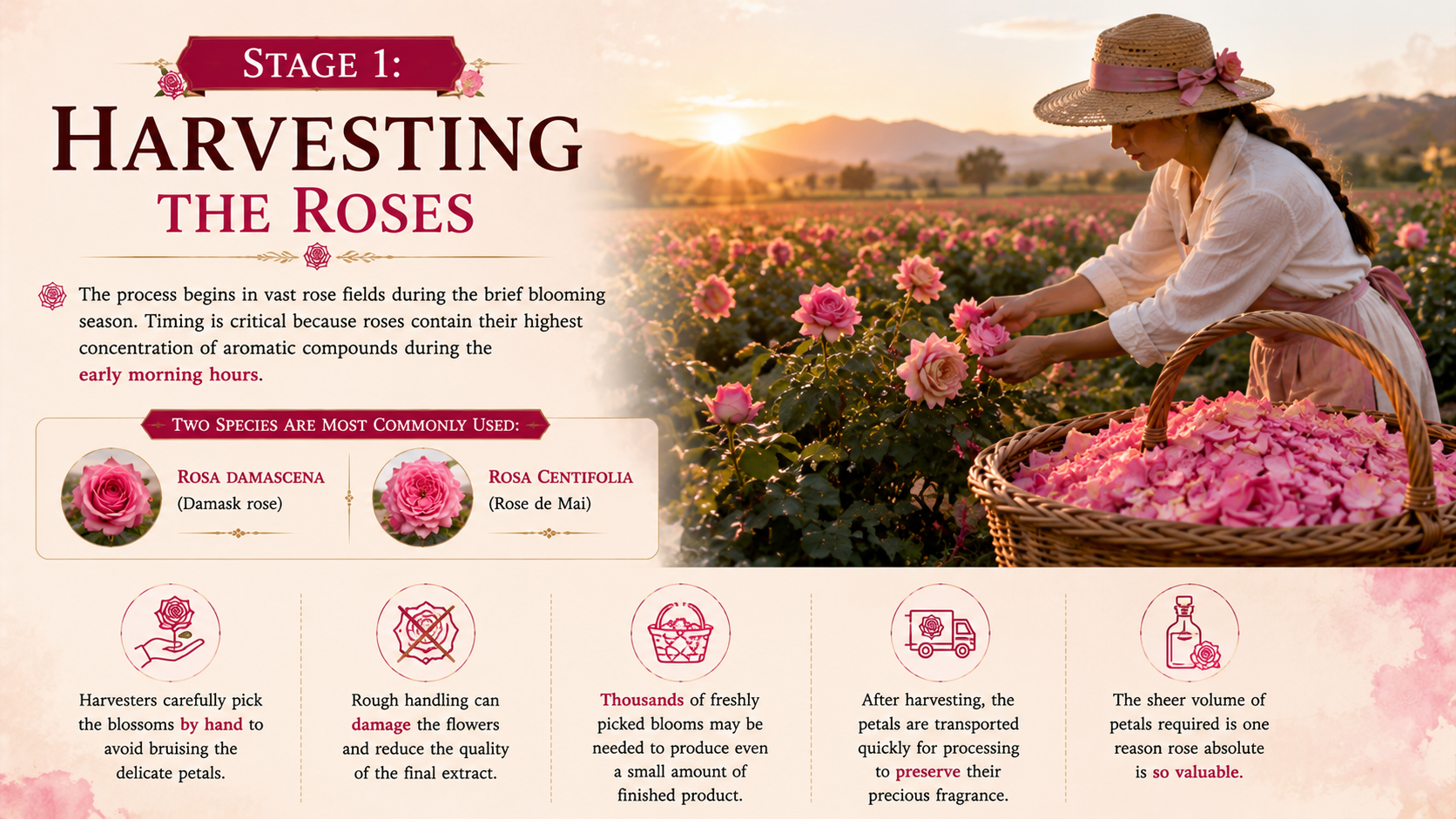
The process begins in vast rose fields during the brief blooming season. Timing is critical because roses contain their highest concentration of aromatic compounds during the early morning hours.
Two species are most commonly used:
Harvesters carefully pick the blossoms by hand to avoid bruising the delicate petals. Rough handling can damage the flowers and reduce the quality of the final extract.
One of the reasons rose absolute is so valuable is the enormous quantity of petals required. Thousands of freshly picked blooms may be needed to produce even a small amount of finished product.
After harvesting, the petals are transported quickly for processing to preserve their precious fragrance.
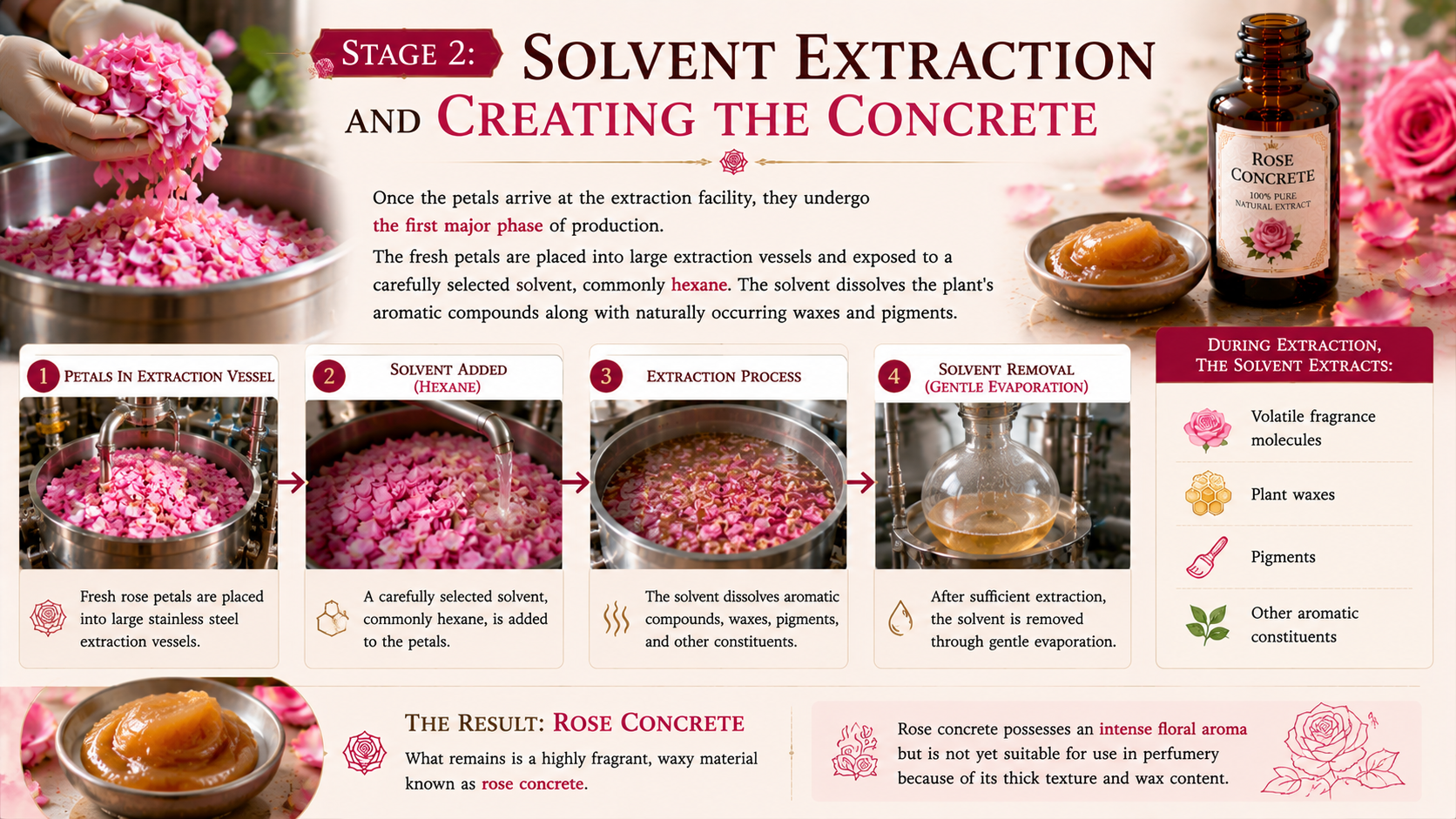
Once the petals arrive at the extraction facility, they undergo the first major phase of production.
The fresh petals are placed into large extraction vessels and exposed to a carefully selected solvent, commonly hexane. The solvent dissolves the plant’s aromatic compounds along with naturally occurring waxes and pigments.
During this stage, the solvent extracts:
After sufficient extraction has occurred, the solvent is removed through gentle evaporation.
What remains is a highly fragrant, waxy material known as rose concrete.
Rose concrete possesses an intense floral aroma but is not yet suitable for use in perfumery because of its thick texture and wax content.
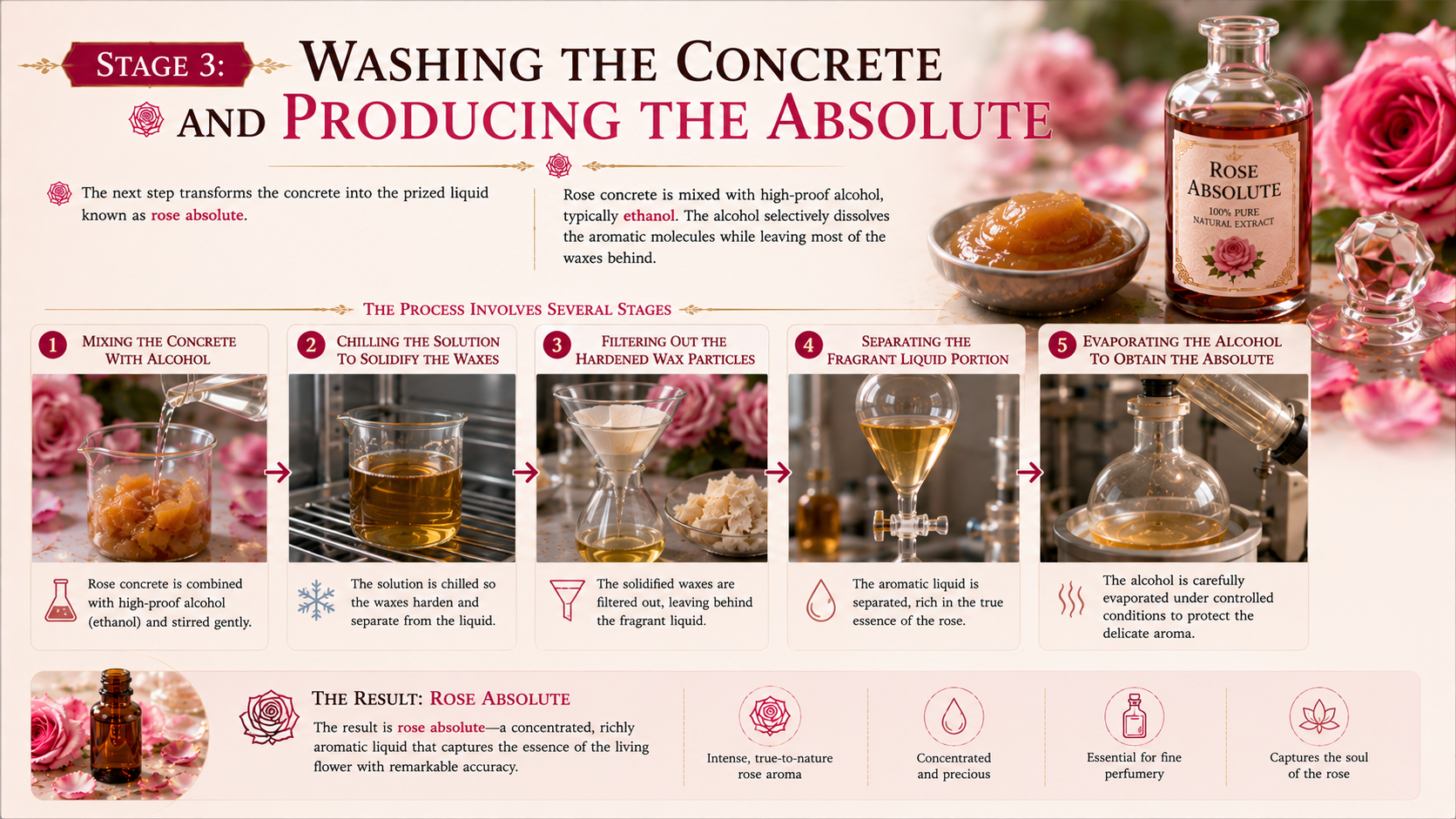
The next step transforms the concrete into the prized liquid known as rose absolute.
Rose concrete is mixed with high-proof alcohol, typically ethanol. The alcohol selectively dissolves the aromatic molecules while leaving most of the waxes behind.
This process involves several stages:
Finally, the alcohol is carefully evaporated under controlled conditions.
The result is rose absolute—a concentrated, richly aromatic liquid that captures the essence of the living flower with remarkable accuracy.
Solvent extraction remains the preferred method for producing rose absolute because it offers several important advantages.
Some fragrance compounds found in roses are sensitive to heat and may be altered or destroyed during steam distillation. Solvent extraction helps retain these delicate molecules.
Compared to steam distillation, solvent extraction often provides a higher yield from the same quantity of petals, making the process more efficient.
Rose absolute is widely admired for its fuller, deeper aroma. Many perfumers believe it more closely resembles the scent of a freshly blooming rose.
Its fragrance may display notes that are:
These complex characteristics contribute to its popularity in fine fragrance creation.
In high-quality rose absolute produced by reputable manufacturers, residual solvent levels are extremely low and typically measured in parts per million. These trace amounts fall within accepted cosmetic safety standards.
Rose concrete is the intermediate product obtained after the initial solvent extraction. It contains aromatic compounds along with waxes and pigments. Rose absolute is the purified liquid produced by washing the concrete with alcohol and removing the waxes.
Yes. Solvent extraction is commonly employed for delicate flowers that do not tolerate steam distillation well, including:
This technique allows perfumers to preserve their intricate fragrance profiles.
The creation of rose absolute is a fascinating blend of craftsmanship, science, and patience. From hand-harvesting delicate petals before sunrise to carefully refining the extract through multiple stages, every step contributes to the exceptional quality of the final product.
This intricate process explains why rose absolute remains one of the most cherished ingredients in perfumery, aromatherapy, and luxury skincare. Its rich, authentic fragrance continues to captivate fragrance enthusiasts around the world, proving that some traditions are truly timeless.

You must be logged in to post a comment.