

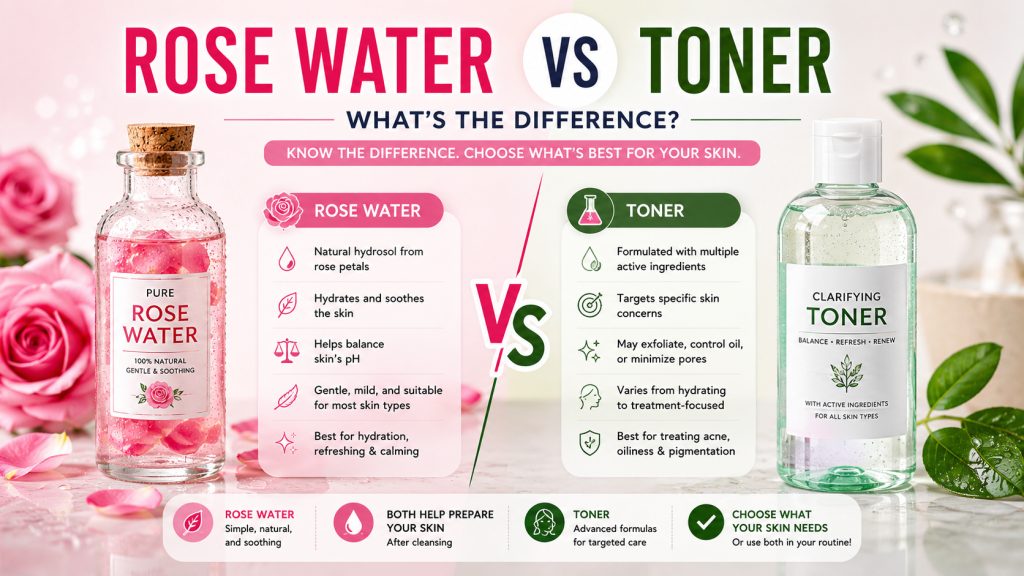
When building a skincare routine, many people use the terms rose water and toner interchangeably. While they may appear similar and are often applied in the same step of a skincare routine, they are not exactly the same product. Understanding the differences between rose water and facial toner can help you choose the right option for your skin type and skincare goals.
This guide explains what rose water and toner are, how they differ, and when you should use each one.

Rose water is a natural hydrosol created through the steam distillation of rose petals. It has been used for centuries in beauty and wellness practices because of its gentle, soothing, and hydrating properties.
Pure rose water is known for:
Because it is typically a single-ingredient product, rose water is often well-suited for sensitive skin and those who prefer simple skincare products.
Rose water has a very light, watery consistency that absorbs quickly into the skin without leaving a heavy residue.
Rose water is especially beneficial for:
A facial toner is a formulated skincare product designed to perform specific functions beyond basic hydration.
Unlike rose water, toners often contain multiple active ingredients chosen to address particular skin concerns.
Depending on the formulation, a toner may include:
Modern toners can help:
Toners can range from very watery to slightly viscous depending on their ingredients and purpose.
Different toners are formulated for:
| Feature | Rose Water | Facial Toner |
|---|---|---|
| Composition | Usually a single natural ingredient | Multiple active ingredients |
| Purpose | Hydration and soothing | Targeted skincare concerns |
| Strength | Very gentle | Can range from mild to strong |
| Skin Types | Suitable for most skin types | Depends on formulation |
| Exfoliation | No | Some toners contain exfoliating acids |
| Oil Control | Mild | Often more effective |
| Sensitivity | Generally low risk | May irritate sensitive skin depending on ingredients |
The biggest difference is that rose water is a simple natural product, while toners are often designed to achieve specific skincare results.
Yes. Pure rose water can function as a natural facial toner.
Many people use rose water after cleansing because it:
For individuals with sensitive skin or those seeking a minimalist skincare routine, rose water can be an excellent alternative to traditional toners.
However, it may not provide the targeted benefits that some specialized toners offer.
Rose water may be all you need if your goal is:
A formulated toner may be more effective if you want to address:
In these situations, ingredients such as salicylic acid, niacinamide, or glycolic acid may provide additional benefits.
It depends on your needs. Rose water may help soothe inflammation and irritation, but an acne-focused toner containing ingredients such as salicylic acid is typically more effective at clearing pores and treating breakouts.
Yes. Many people use rose water as a refreshing hydrating mist and follow it with a treatment toner designed for specific concerns. The order and frequency should be based on your skin’s tolerance.
No. Older alcohol-based toners often had a reputation for causing dryness. Modern toners are frequently formulated with hydrating ingredients such as hyaluronic acid and glycerin to support the skin barrier while providing additional skincare benefits.
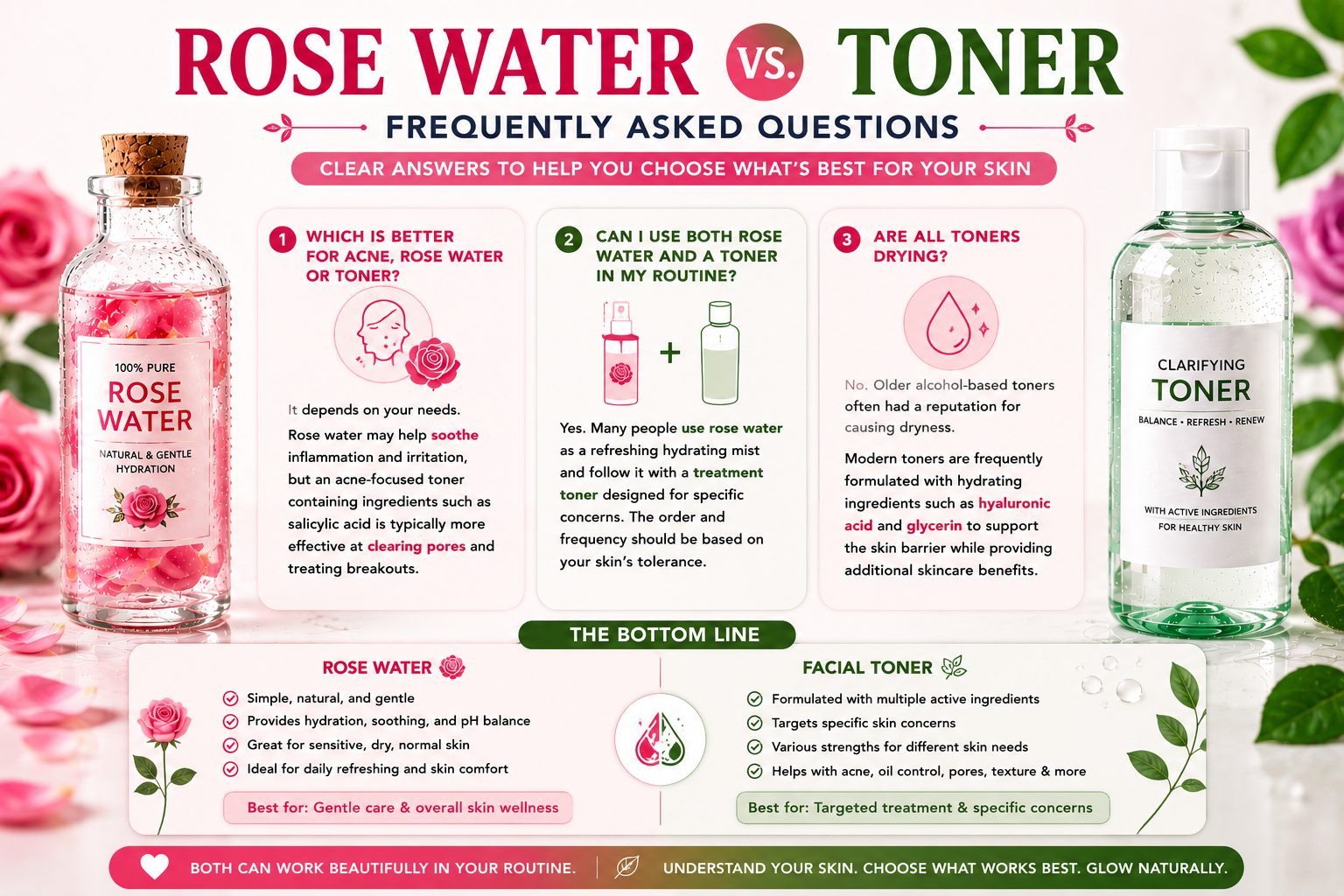
Although rose water and facial toner are often used in similar ways, they serve different purposes. Rose water is a simple, natural product that provides gentle hydration, soothing benefits, and pH balance. Toners, on the other hand, are multi-ingredient formulations designed to target specific skin concerns such as acne, oiliness, pigmentation, or texture issues.
If you want a gentle, all-purpose option, pure rose water can be an excellent choice. If you have a specific skincare concern that requires targeted treatment, a well-formulated toner may be the better solution. Many skincare enthusiasts successfully use both products as part of a balanced and effective skincare routine.


You must be logged in to post a comment.