

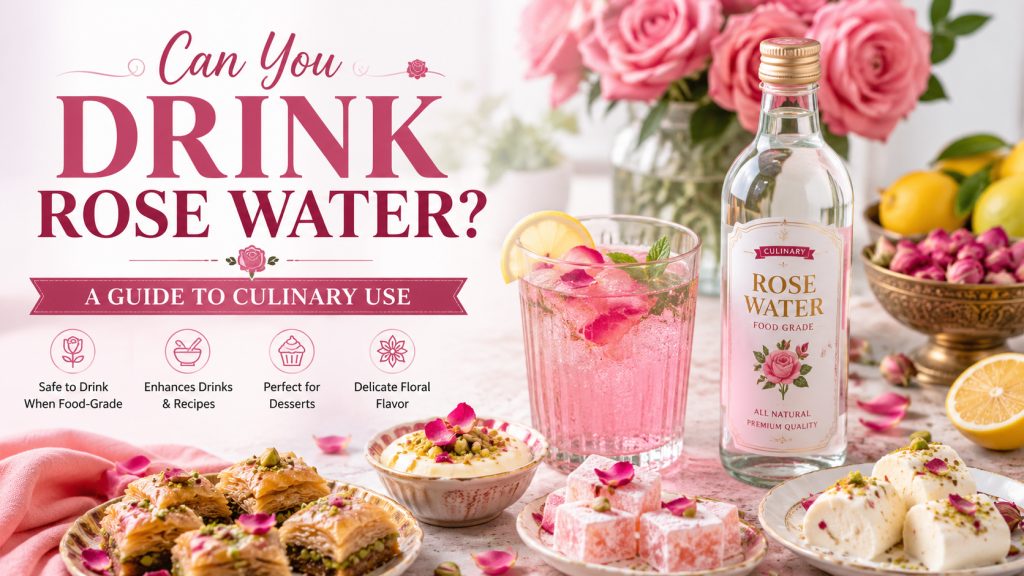
Rose water is widely known for its skincare and beauty benefits, but it has also been used as a culinary ingredient for centuries. From Middle Eastern desserts to refreshing beverages, food-grade rose water adds a delicate floral flavor that can transform ordinary recipes into something unique and memorable. If you’ve ever wondered whether rose water is safe to drink, the answer is yes—provided you choose a product specifically labeled for culinary use.
This guide explores the safety of drinking rose water, how to use it in beverages and recipes, and tips for selecting the right product.

Yes, food-grade rose water is generally safe to consume and has been used in cuisines around the world for generations.
However, it’s important to understand that not all rose water products are created equal.
Before consuming rose water, check the label carefully.
Look for:
Avoid cosmetic rose water products, which may contain preservatives, fragrances, or additives that are not intended for consumption.
While rose water is not a medical treatment, many people enjoy it because it may:
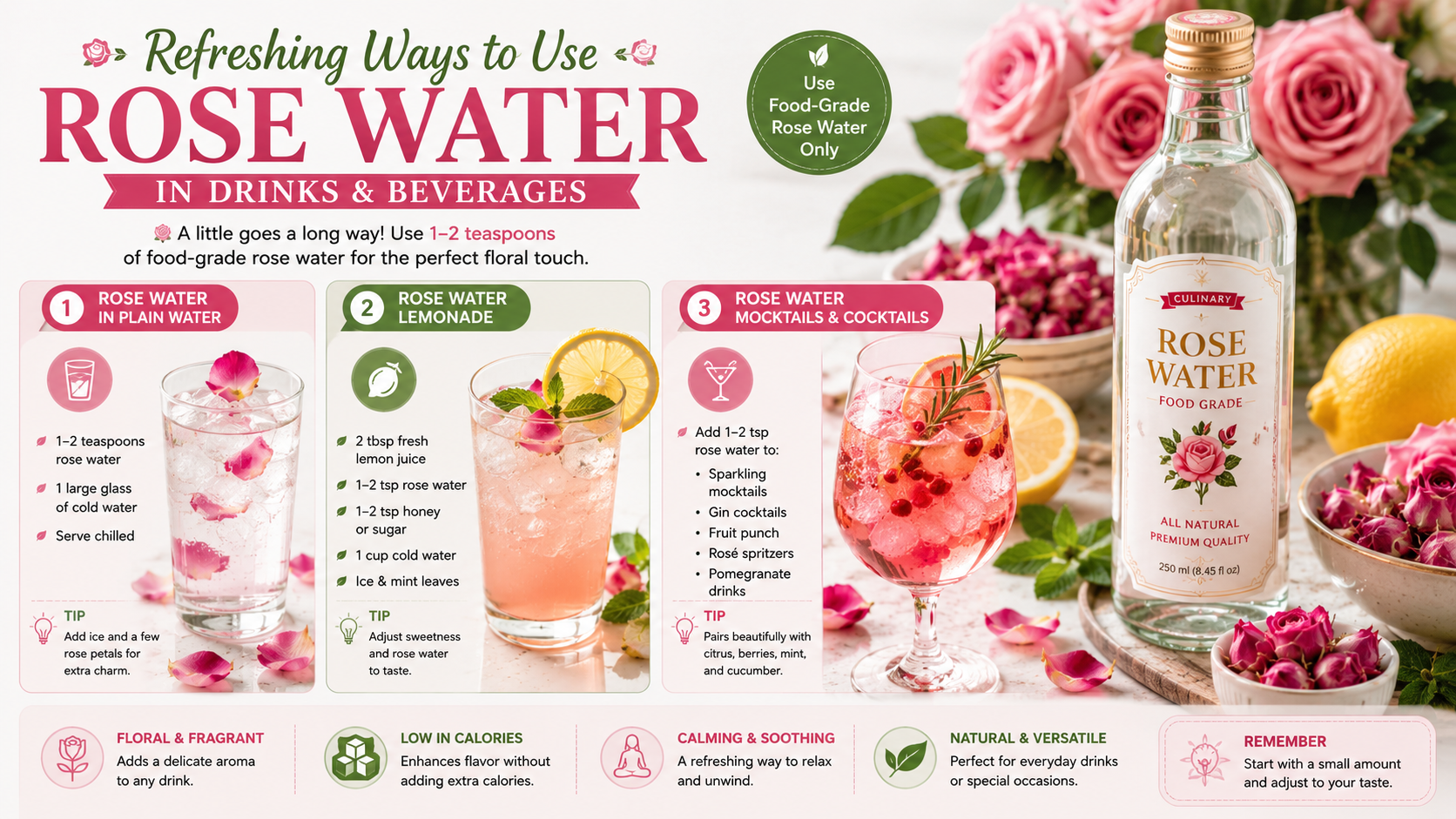
One of the easiest ways to enjoy rose water is by adding it to beverages.
The key is moderation. Rose water has a concentrated floral flavor, and a little goes a long way.
Add:
Serve chilled for a light and refreshing floral drink.
Rose water pairs beautifully with citrus flavors.
Try combining:
The result is a fragrant and refreshing beverage perfect for warm days.
Rose water is commonly used in:
Its subtle aroma complements ingredients such as pomegranate, raspberry, strawberry, and citrus fruits.

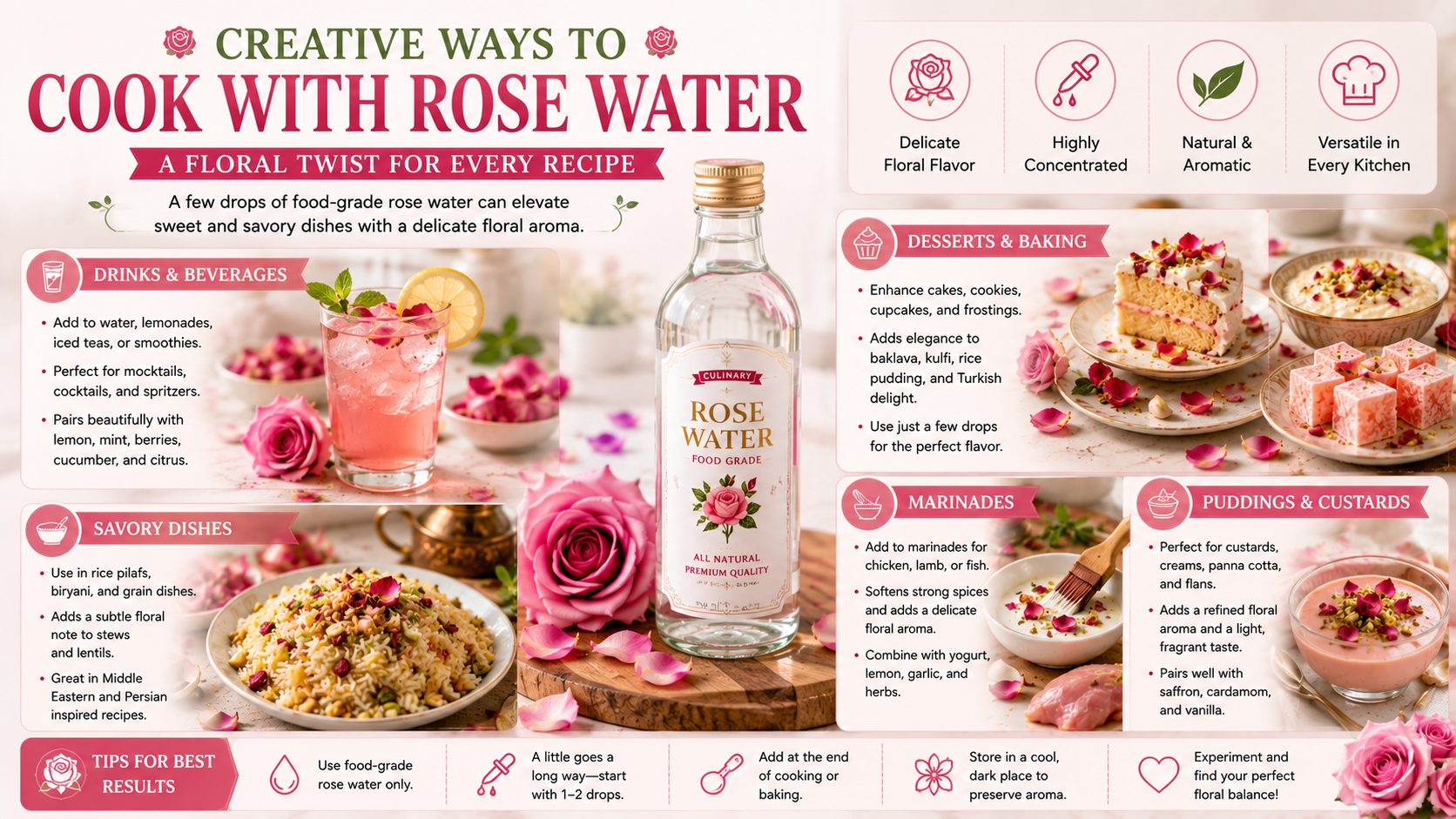
Rose water has a long history in Middle Eastern, Persian, Indian, and Mediterranean cuisine.
Its floral notes add depth and sophistication to both sweet and savory dishes.
Rose water is often used in:
Just a few drops can enhance the flavor profile without overpowering the dessert.
Rose water works particularly well in baked goods.
Popular options include:
It pairs exceptionally well with vanilla, pistachio, cardamom, and almond flavors.
Adding a small amount of rose water to puddings or custards creates a refined floral aroma and elegant taste.
Although less common, rose water can also be used in savory cooking.
Examples include:
Use it sparingly to avoid overwhelming other ingredients.
Food-grade rose water is becoming increasingly accessible.
Look for culinary rose water in:
Many reputable brands now sell culinary rose water online.
When shopping, check:
Choose products with simple formulations and minimal additives whenever possible.
Rose water has a distinctive floral flavor that is slightly sweet, aromatic, and perfume-like. When used correctly, it adds a pleasant floral note without overwhelming a drink or dish.
No. Only consume rose water specifically labeled as food-grade or culinary rose water. Cosmetic rose water products may contain ingredients that are not intended for ingestion.
Start with a very small amount, such as one or two teaspoons mixed into a large glass of water. Because the flavor is concentrated, most recipes require only a few drops to a teaspoon.
Drinking food-grade rose water is a safe and enjoyable way to explore new flavors and culinary traditions. Whether added to water, lemonade, mocktails, desserts, or savory dishes, rose water offers a unique floral character that enhances a wide range of recipes. By choosing a quality culinary product and using it in moderation, you can enjoy the delicate taste and aroma that have made rose water a cherished ingredient across cultures for centuries.


You must be logged in to post a comment.