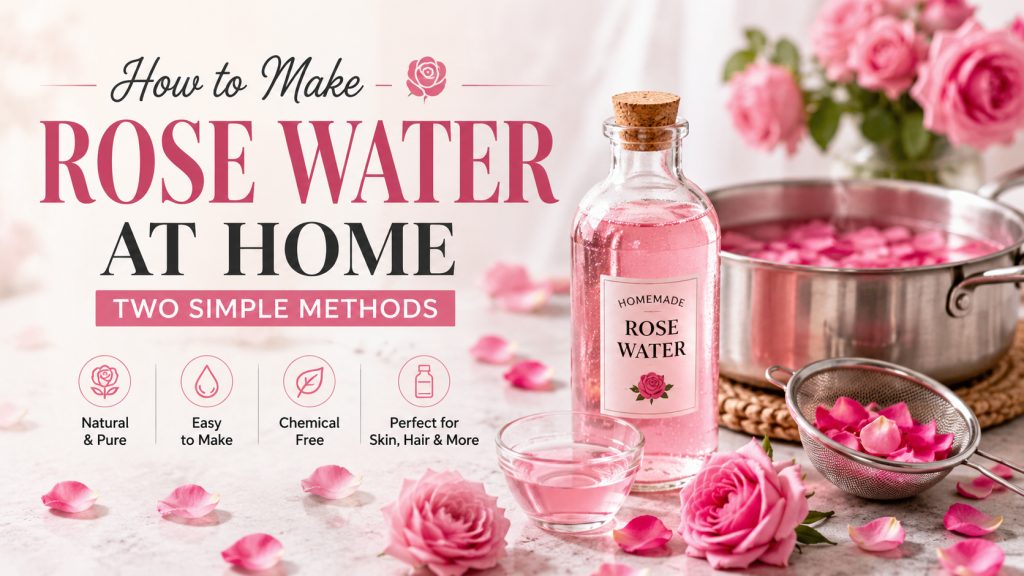
Rose water is a versatile natural product used in skincare, cooking, aromatherapy, and home fragrance. While high-quality rose water is available commercially, making it at home can be both rewarding and cost-effective. Homemade rose water allows you to control the ingredients, avoid preservatives, and enjoy a fresh product made from real rose petals.
In this guide, you’ll learn two easy methods for making rose water at home: the beginner-friendly simmering method and the more traditional distillation technique. We’ll also cover storage tips to help your homemade rose water stay fresh for as long as possible.
Learn how to make homemade rose water using either the simple simmering method or the more concentrated distillation technique with fresh rose petals.
Preparing for Your DIY Rose Water
Before you begin, it’s important to choose the right roses and gather the necessary equipment.
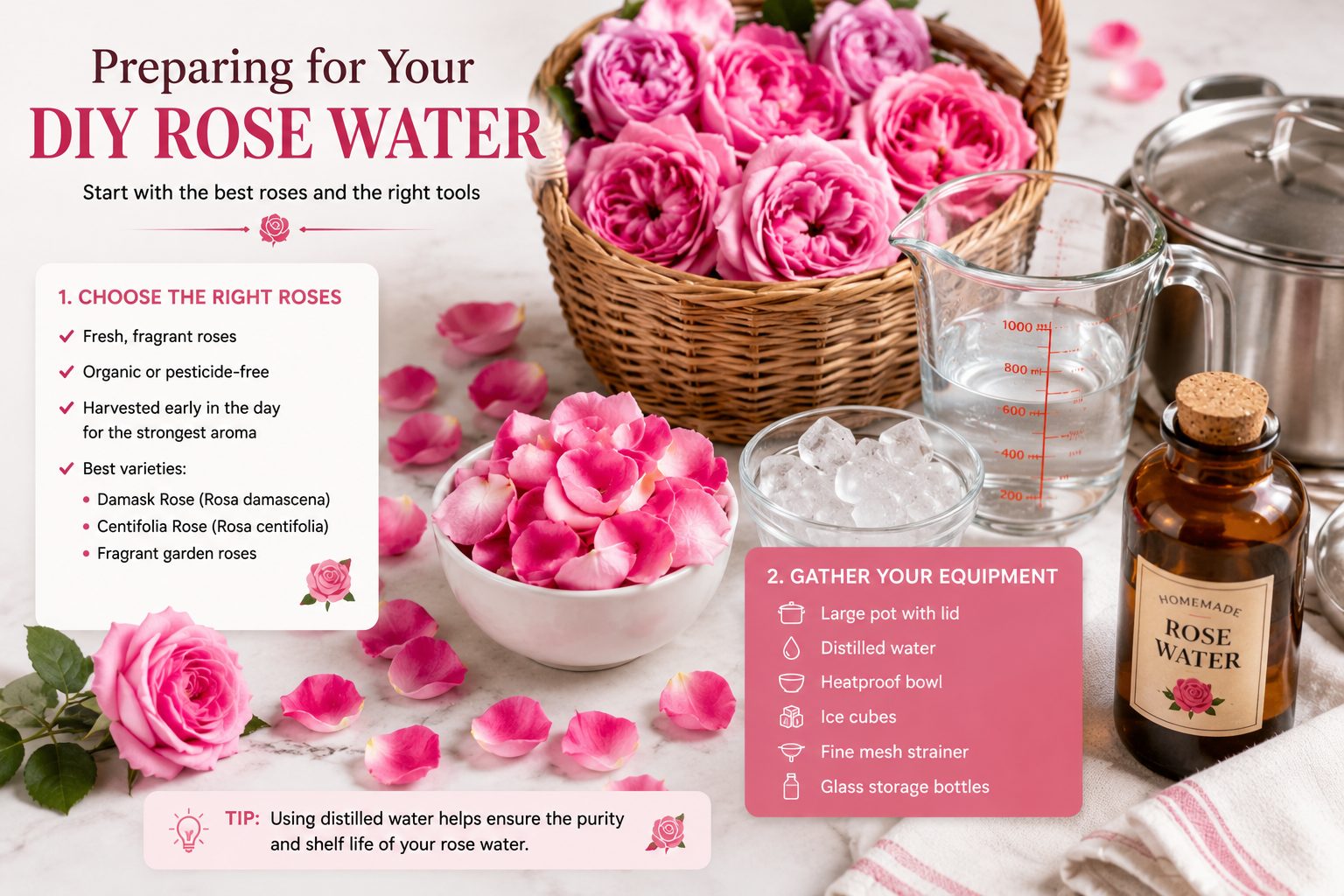
Successful homemade rose water starts with fresh, fragrant roses and the right equipment. Choosing quality ingredients helps ensure a more aromatic and longer-lasting final product.
Choose the Right Roses
For the best results, select:
Fresh, fragrant roses.
Organic or pesticide-free blooms.
Roses harvested early in the day when their fragrance is strongest.
Popular varieties include:
Damask roses (Rosa damascena)
Centifolia roses (Rosa centifolia)
Garden roses with strong natural fragrance
Avoid roses from florists unless you’re certain they have not been treated with chemicals.
Gather Your Equipment
Depending on the method you choose, you may need:
A large pot with a lid
Distilled water
Heatproof bowl
Ice cubes
Fine mesh strainer or cheesecloth
Glass storage bottles
Using distilled water helps ensure the purity and shelf life of your finished rose water.
Compare the simmering and distillation methods to choose the best approach for creating homemade rose water based on your needs, equipment, and desired potency.
Method 1: The Simmering Technique (Beginner-Friendly)
This is the easiest way to make rose water at home and requires minimal equipment.
Step 1: Prepare the Petals
Gently rinse your rose petals to remove any dirt or debris.
Step 2: Add Petals and Water
Place the petals in a large pot and add just enough distilled water to cover them.
Step 3: Simmer Gently
Cover the pot with a lid and heat on low. Do not boil.
Allow the mixture to simmer for approximately 20 to 30 minutes until the petals lose most of their color.
Step 4: Cool and Strain
Remove the pot from heat and allow the liquid to cool.
Strain through a fine mesh strainer or cheesecloth into a clean container.
Step 5: Store
Transfer the rose water into a sterilized glass bottle and refrigerate.
🔥 EDITORS’ CHOICE EDITORIAL REVIEW
“Elevate your daily wellness and skincare routine with this authentic, ultra-premium Bulgarian Rose Oil—the ultimate gold standard in botanical luxury.”
What kind of water should I use to make rose water?
Distilled water is recommended because it contains fewer impurities and minerals that could affect the quality and shelf life of your rose water.
Can I use dried rose petals?
Yes. Dried rose petals can be used successfully, although fresh petals often produce a stronger fragrance and more vibrant result.
Why didn’t my rose water turn pink?
The color depends on the variety of rose used. Many fragrant roses produce a clear or pale-yellow hydrosol. Color is not an indicator of quality or potency.
Homemade rose water can be used as a facial toner, hair refresher, aromatherapy mist, culinary ingredient, and natural room spray, making it one of the most versatile DIY products you can create.
Conclusion
Making rose water at home is a simple and enjoyable project that allows you to create a natural, preservative-free product for skincare, cooking, aromatherapy, and home use. Whether you choose the beginner-friendly simmering method or the more traditional distillation technique, homemade rose water offers a fresh and customizable alternative to store-bought versions. By selecting quality roses and storing your finished product properly, you can enjoy the benefits of homemade rose water for weeks or even months.






You must be logged in to post a comment.