
Savory Essential Oil
savory essential oil
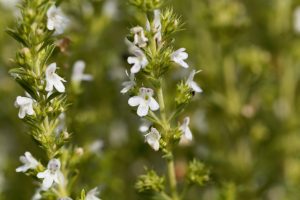
Savory Essential Oil in history
In ancient medicine, the Satureja plant was an aphrodisiac to the Greeks, deriving its name from the word ‘satyr’. Its use spread to Britain and larger parts of Europe as a culinary additive to meat dishes. In the middle ages, the Satureja plant would help heal gout and stomach problems.
It was such a potent therapeutic agent that it found its way to German and French folk medicine. In the 17th century, Pierre Argellata claimed that satureja extracts had healed his patients’ throat and mouth ulcers1. In recent history, the savory essential oil has been the to-go-to therapy for rotting teeth and subsequent toothache relief.

Savory Essential Oil Uses
Chemical components of savory essential oil
Various researches show that Satureja extracts have more than 25 components. The major constituents of savory essential oil are:
- γ-terpinene2 at 40.9%
- carvacrol2 at 39.3%
- o-cymene3 at 17.98%
- linalool3 at 9.65%
Savory essential oil’s health benefits
1. Anti-inflammatory
Research shows that savory essential oil is very rosmarinic acid4 rich. Rosmarinic acid is a compound common in essential oils such as Perilla and Rosemary. It is a polyphenol5 that occurs naturally in the Lamiaceae family of plants such as sage, rosemary, and lemon balm mint. Rosmarinic acid has potent anti-inflammatory and antioxidant6 effects.
It can also help protect the cells from cancer. This polyphenol also has immune-stimulating effects. It makes the Lamiaceae family of plants attractive smelling and a fantastic cooking ingredient. The acid makes savory essential oil the perfect treatment for ailments that trouble the skin, such as psoriasis.
It also relieves muscle pain, intestinal and stomach disorders. As an antioxidant, it will protect your skin from the effects of oxidative stress. It will also ward off other degenerative diseases.
2. Anti-cancer benefits
Research also proves that the phenolic compounds rich in savory essential oils can inhibit or delay the cellular injury caused by oxidative damage. This process can help protect the cells from cancer7, neurological disorders, and cardiovascular disease8. Further research shows that winter savory essential oil can help stop the spread of the cancer of the colon9.
3. Antidiabetic properties
The antioxidant properties of polyphenols can help cut down on the body’s blood glucose levels. The savory essential oil can also work as an antidiabetic drug. The Iranian Satureja khuzestanica variety10 can decrease serum glucose in patients lessening liver and heart muscle damage. The high levels of carvacrol in the savory essential oil will lower cholesterol levels11, helping protect the heart.
4. Antimicrobial activity
Aromatic essentials oils are a safe and gentle source of food preservatives. Their antimicrobial properties12 can inhibit the growth of bacteria, not just in food but also in the human body. Savory essential oil is thymol and carvacrol rich.
These two chemical components strongly inhibit the growth of harmful microorganisms, such as bacteria and fungi. Thymol can hinder skin and upper respiratory tract infections. O-cymene and carvacrol are toxic to Escherichia coli, helping to heal infections of the gut. The γ-terpinene in this oil is active against bacteria that cause throat infections and thrush.
5. Antiseptic properties
This essential oil’s high phenol content makes it a fantastic antiseptic. Use it to treat cuts, burns, sores, wounds, and abscesses. There are mouthwash and toothpaste products that incorporate savory essential oil into their products.
6. Aphrodisiac effects
Blend savory essential oil with a carrier or massage oil for its century’s old, renowned benefits as an aphrodisiac.
How to use savory essential oil
- For cuts, add four drops of the essential oil to 70% proof alcohol to stop the stinging and bleeding. Combine 3 drops of savory essential oil, soya oil, and three drops of wheat germ oil and apply it to a cut to hasten healing.
- To use it as a mouth antiseptic, use it as a rinse or add it to your mouthwash
- For stomach and liver wellness, make a tonic with a few drops of savory essential oil in it for your morning cup.
- For sore muscles, arthritis pain relief, add six drops of savory essential oil to sesame oil and apply it on your joints and other pain spots.
- Diffuse it into your living spaces to ward off infections and to sanitize the air.
You must be logged in to post a comment.