

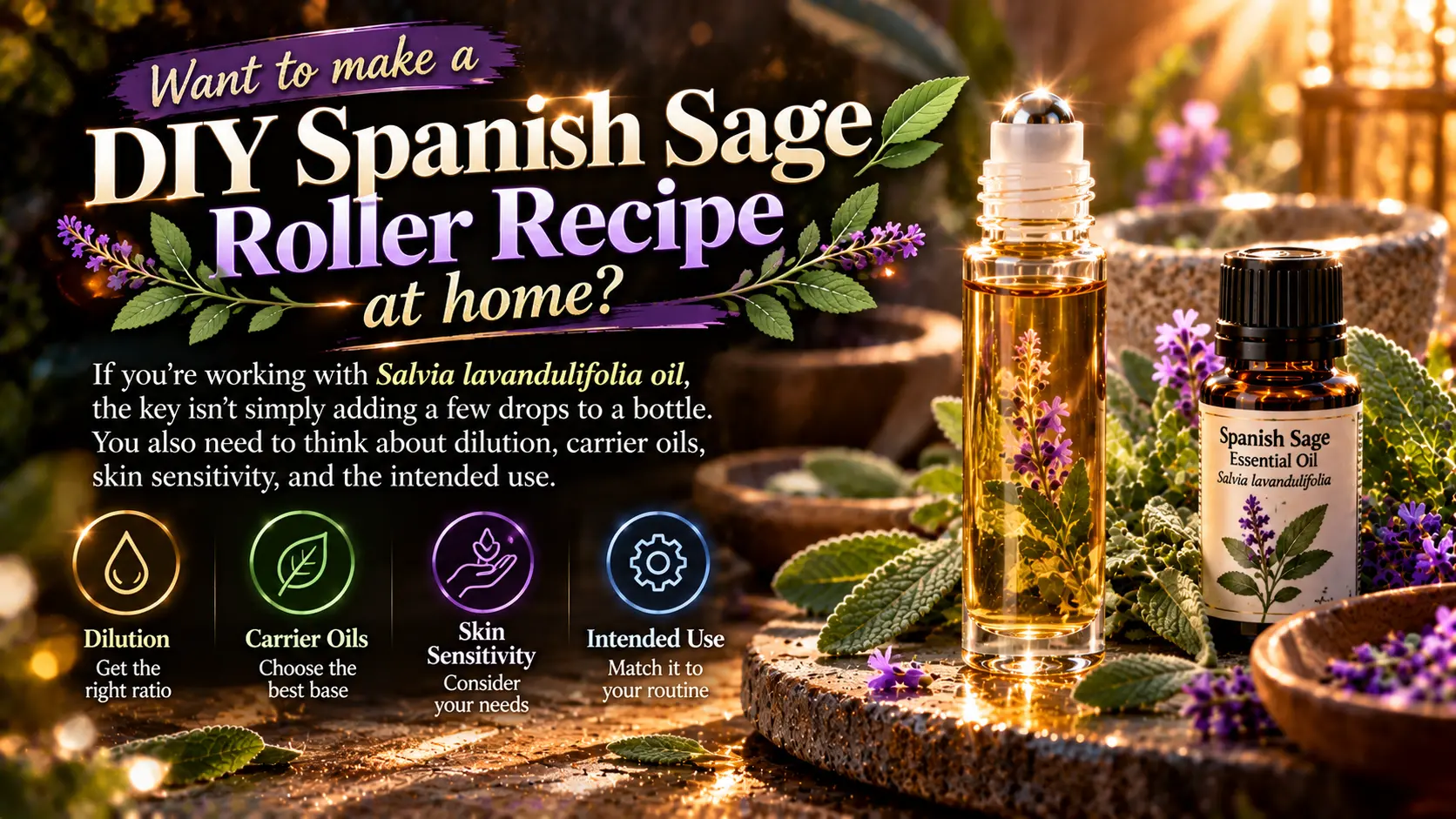
Want to make a diy spanish sage roller recipe at home?
If you’re working with Salvia lavandulifolia oil, the key isn’t simply adding a few drops to a bottle. You also need to think about dilution, carrier oils, skin sensitivity, and the intended use.
So, how do you create a simple Spanish sage roller without overdoing the essential oil?
What dilution should you choose for a homemade roller?
A lower dilution is a sensible starting point for many adult topical aromatherapy preparations. A 1% to 2% dilution is commonly used as a general formulation range, although the appropriate concentration depends on the product, user, and intended application.
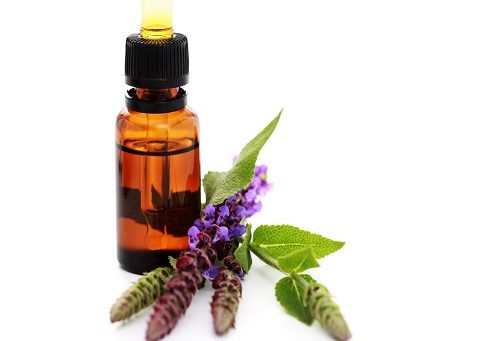
Premium Organic Spanish Sage Essential Oil – Pure & Steam-Distilled
Why not use more pure Spanish sage oil?
Because essential oils are highly concentrated. Increasing the amount does not automatically make a roller better.

This is one of the most common DIY questions: how many drops of Spanish sage go into a 10ml roller?
A frequently used approximation is 20 drops per milliliter. However, actual drop size varies with the bottle, oil viscosity, and dispensing method.
Using the 20-drops-per-ml estimate:
Why do some DIY recipes suggest 3–6 drops?
Because drop-size assumptions differ. A “drop” is not a precise unit of volume, so counting drops can produce different concentrations from one bottle to another.
For greater consistency, measure by volume when possible and follow the essential-oil supplier’s recommended dilution guidance.

So, which carrier oil works best with Spanish sage?
There isn’t one universal winner. The right carrier depends on skin feel, stability, availability, and personal preference.
Why is fractionated coconut oil so popular?
It has a light texture and is commonly used in roll-on and cosmetic formulations.
Could jojoba be another good choice?
Yes. Jojoba is widely used in skincare formulations because of its smooth feel and good stability.
Are there other options for a diy spanish sage roller recipe?
Yes. You can choose a carrier based on the texture and storage characteristics you prefer.
Always check for known allergies before selecting a carrier oil.

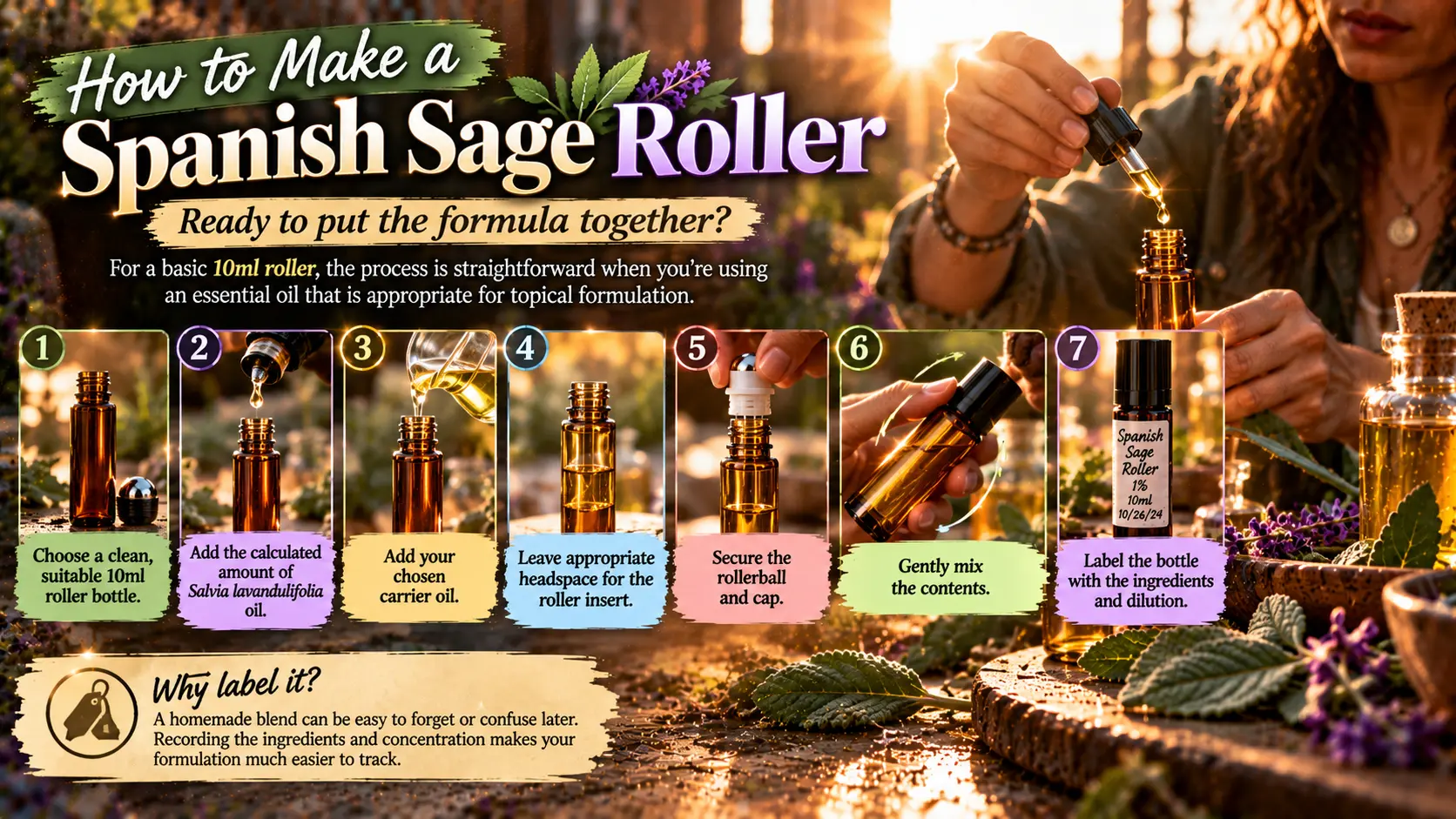
Ready to put the formula together?
For a basic 10ml roller, the process is straightforward when you’re using an essential oil that is appropriate for topical formulation.
Why label it?
A homemade blend can be easy to forget or confuse later. Recording the ingredients and concentration makes your formulation much easier to track.
Using the common 20-drops-per-ml estimate, about 2 drops equals 1% and 4 drops equals 2% in a 10ml formula. Actual drop size varies, so these are approximate values.
Fractionated coconut oil and jojoba are practical choices. Your decision can depend on texture, stability, availability, and personal preference.
It’s generally better to dilute essential oil for topical use rather than applying pure Spanish sage oil directly. Undiluted essential oils can cause irritation or sensitization.
Yes. Salvia lavandulifolia is the botanical name commonly used for Spanish sage. Check the botanical name when buying Salvia lavandulifolia oil to help confirm the identity of the ingredient.
Absolutely. If you don’t want to calculate dilution or measure carrier oils yourself, an organic Spanish sage essential oil roller can be a convenient alternative.
A professionally prepared roller can save time by providing a ready-to-use formulation with clearly stated ingredients and directions.
So, what makes a good diy spanish sage roller recipe?
It’s about getting the balance right. Choose a suitable carrier, calculate a conservative dilution, measure carefully, and keep clear records of your formula.
If you’re experimenting with Salvia lavandulifolia oil, start simple rather than adding excessive amounts of pure Spanish sage oil.
And if DIY formulation isn’t your thing, an organic Spanish sage essential oil roller offers a convenient ready-to-use option—without the measuring, mixing, and bottle preparation.
Whether you formulate your own or choose a finished roller, clear ingredients, responsible dilution, and proper usage directions should come first.








You must be logged in to post a comment.