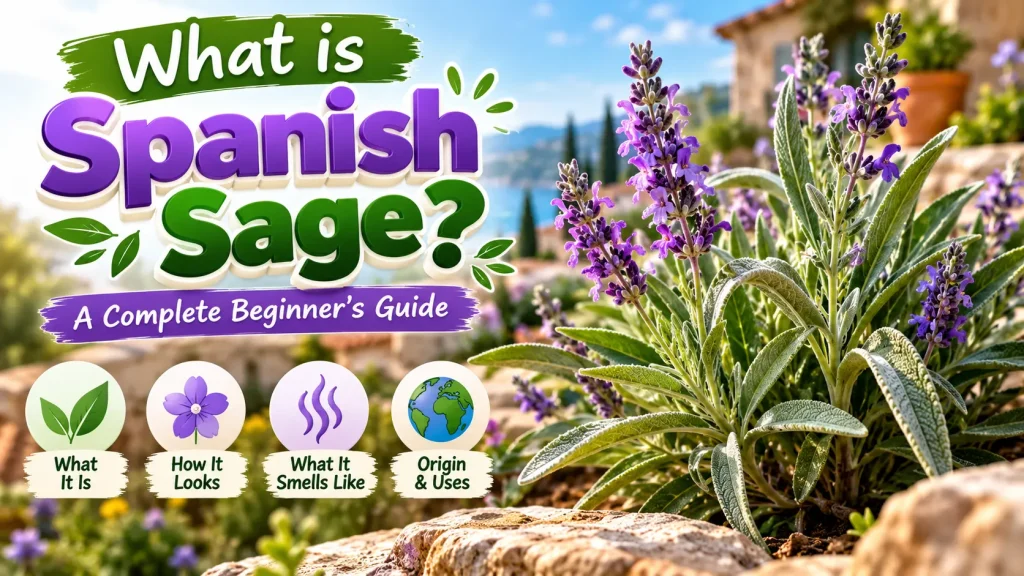
Have you ever wondered what is Spanish sage and why it is sometimes called lavender-leaf sage?
If you’re new to herbs, Spanish sage is an interesting plant to discover. It combines a Mediterranean appearance with a fresh, herbal fragrance. But is it the same as the sage used in cooking? Where does it come from? And what makes it different?
Let’s explore Spanish sage by asking the questions a beginner is most likely to have.
What exactly is Spanish sage?
Spanish sage is a woody, perennial herb in the mint family, Lamiaceae. Its botanical name is Salvia lavandulifolia. Why does the scientific name matter? A botanical name helps identify the plant precisely.
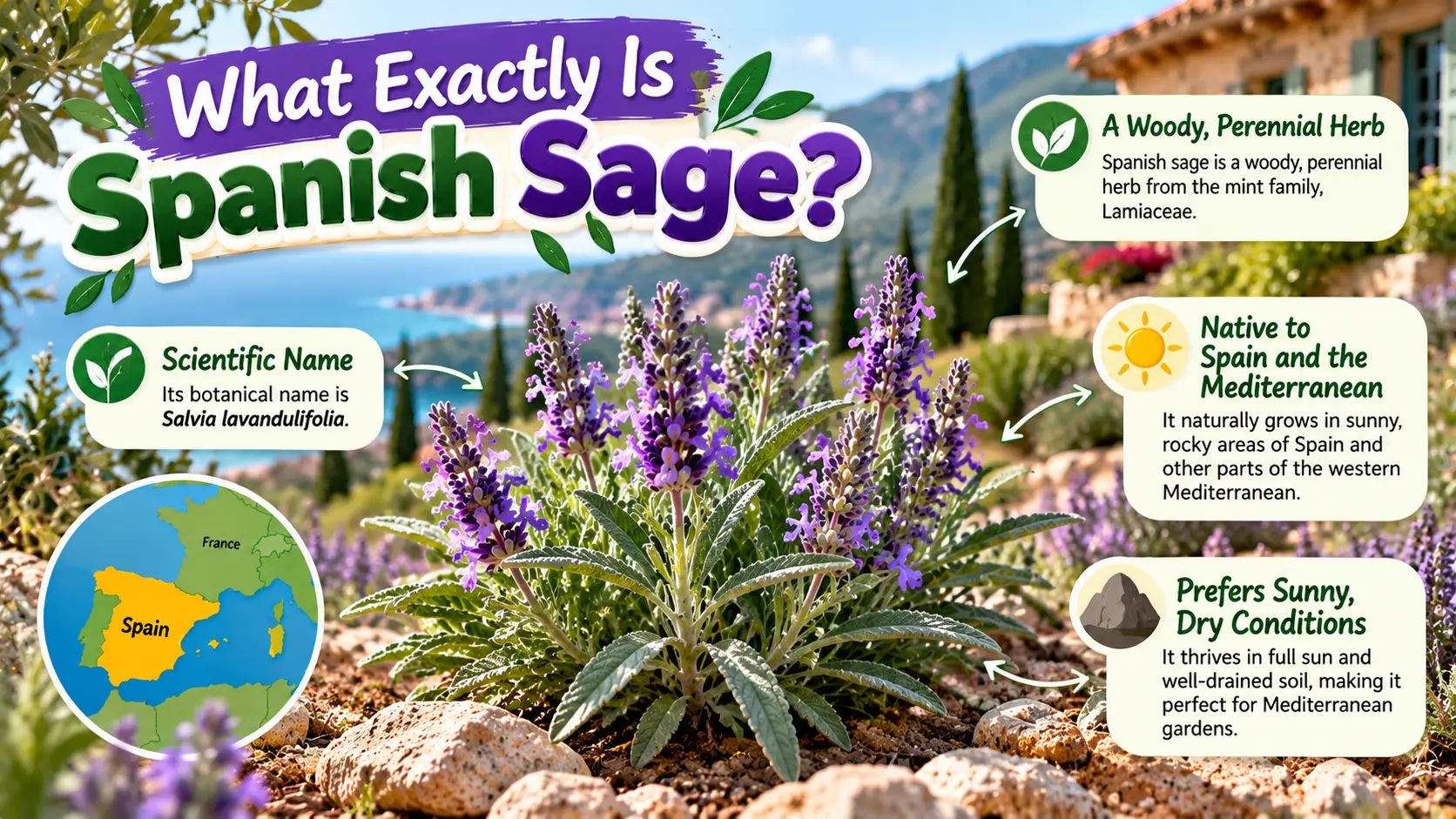
How would you recognize Spanish sage in a garden? Look for a compact, woody plant with narrow grey-green to silvery leaves. During flowering, it can produce upright purple-blue flower spikes.
Why is it called lavender-leaf sage? The narrow leaves can resemble lavender foliage, while the purple-blue flowers create a similar visual impression. Does that make it lavender? No. Spanish sage remains a sage species.

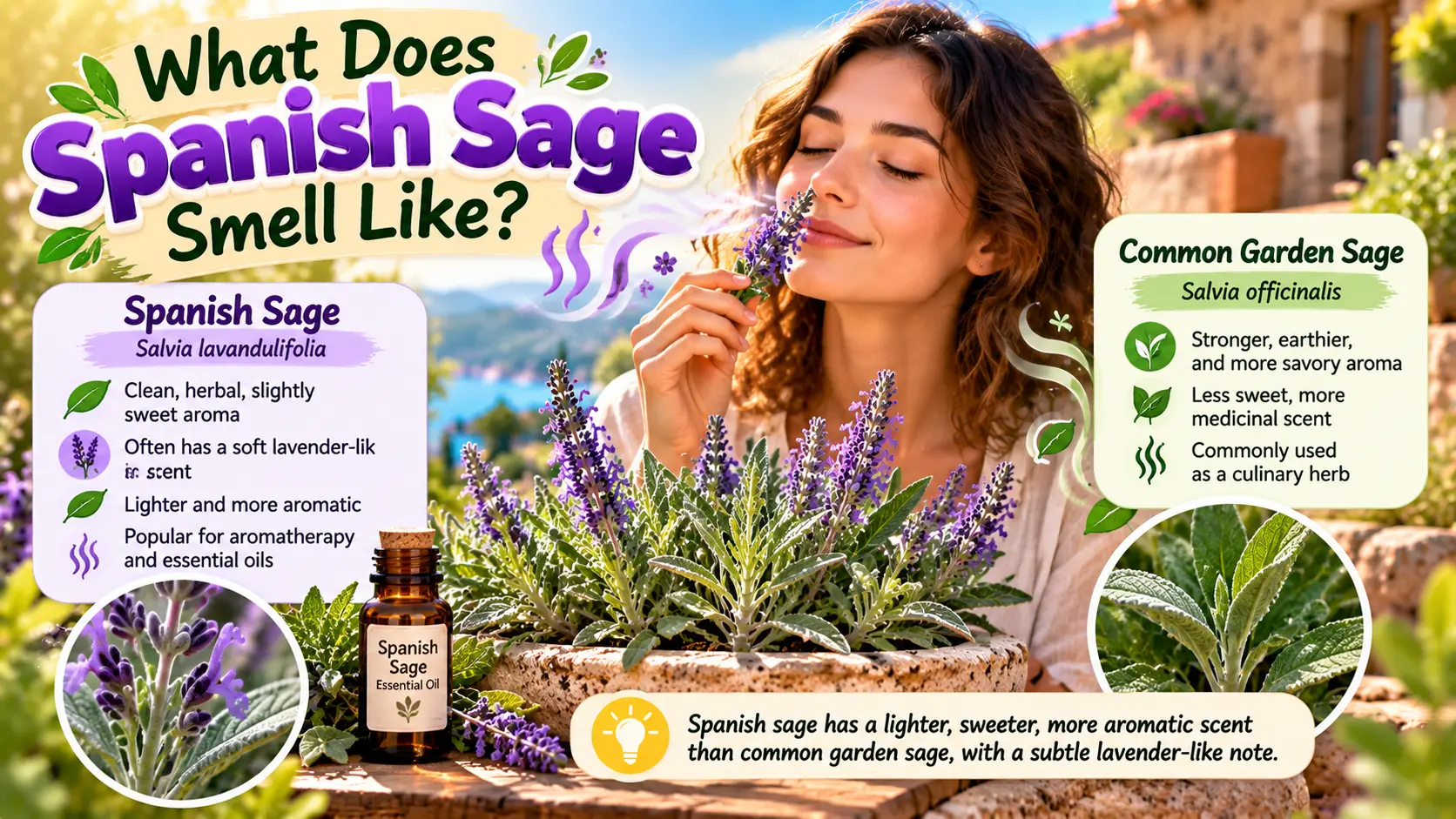
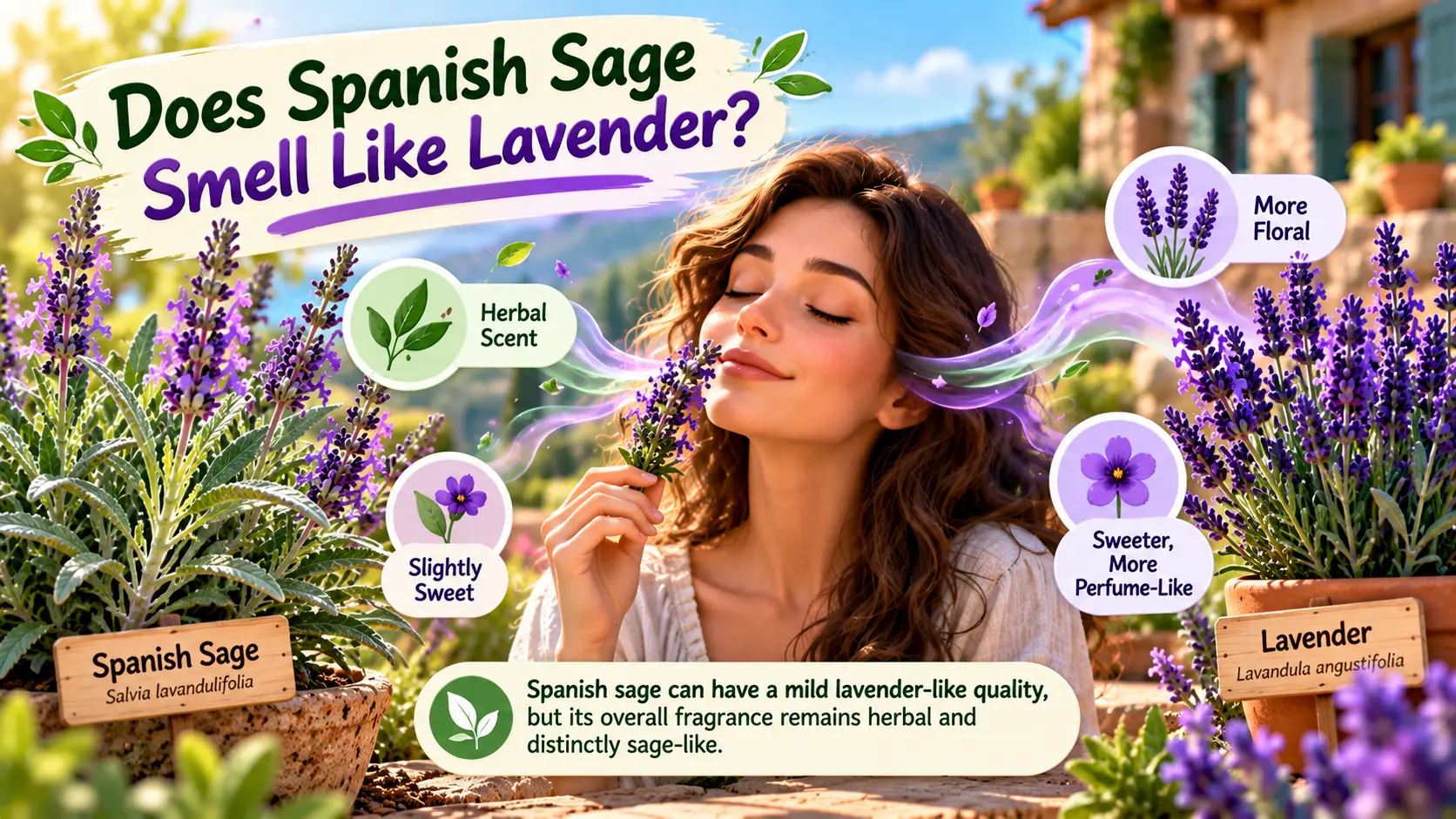
Does Spanish sage smell like ordinary garden sage? Not quite. Its fragrance is generally clean, herbal, and slightly sweet, with a soft lavender-like note.
What makes that interesting? Compared with common culinary sage, Spanish sage is often described as lighter and more aromatic. Its scent interests fragrance and essential-oil researchers.
So, what is the difference between Spanish sage and common sage?
Common garden sage is usually Salvia officinalis, while Spanish sage is Salvia lavandulifolia. They are different species.
What does Spanish sage need to grow well? Its Mediterranean origins suggest that this plant generally prefers strong sunlight and soil that drains quickly.
Why avoid excess water? The plant is adapted to dry Mediterranean conditions.
Can Spanish sage be used for essential oil? Yes. Its leaves and flowering parts contain aromatic compounds that can be distilled into essential oil.
But what about Spanish sage benefits? This is where careful wording matters. Traditional use and early research may make the plant interesting, but they do not automatically prove medical benefits.
Is Spanish sage automatically safe because it is natural? No. Natural products can still cause problems when used incorrectly.
Essential oil is highly concentrated and should not be swallowed unless specifically directed by a qualified professional. Dilution and proper handling matter for topical or aromatic use. People who are pregnant, taking medicines, or managing a medical condition should ask a healthcare professional before using concentrated herbal products.
So, what should a beginner remember? Spanish sage is a distinct Mediterranean sage with silvery foliage, purple-blue flowers, and a clean, slightly sweet aroma. Once you understand its identity, growing needs, scent, possible uses, and safety limits, you can explore this herb with more confidence.
Spanish sage is related to culinary sage, but it should not automatically be treated as a cooking ingredient. If you plan to consume an herb, make sure the species is specifically identified and intended for culinary use.
Yes. Give it plenty of sunlight and well-drained soil. Avoid consistently wet conditions, particularly around the roots.
It can have a mild lavender-like quality, but its overall fragrance remains herbal and distinctly sage-like.
So, what is Spanish sage?
It is Salvia lavandulifolia, a fragrant Mediterranean sage with narrow grey-green leaves and attractive purple-blue flowers. Its fresh, slightly sweet aroma and easy-to-understand growing needs make it an appealing plant for beginners.
The next time you hear the term “lavender-leaf sage,” you’ll know exactly what it means—and why Spanish sage deserves a place in the world of Mediterranean herbs.