
When creating essential oil sprays, facial mists, toners, aromatherapy products, or bath formulations, one challenge always comes up: how do you mix oil with water?
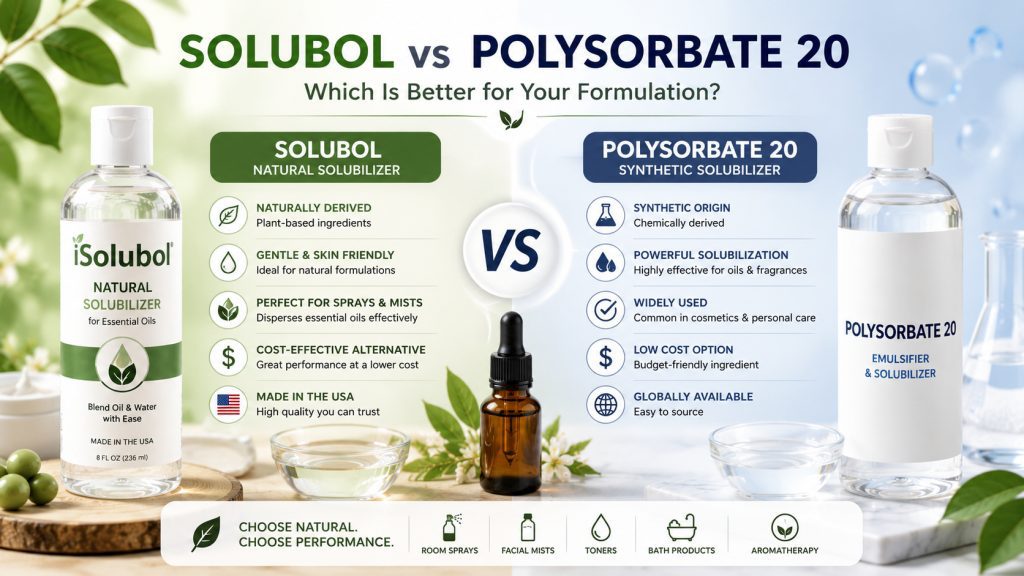
Because essential oils naturally float on water, formulators use solubilizers to help disperse oils evenly throughout water-based products. Two of the most commonly discussed options are Solubol and Polysorbate 20.
But which one is better?
The answer depends on your formulation goals, ingredient preferences, and target market. In this guide, we’ll compare Solubol and Polysorbate 20 to help you choose the best option for your products.
Solubol is a natural solubilizing agent developed specifically for dispersing essential oils into water-based formulations. It is commonly used in:
Solubol is popular among formulators who prefer naturally derived ingredients and want to create products that align with clean beauty and natural wellness trends.
Its primary purpose is to help essential oils disperse evenly in water while maintaining a lightweight texture.
Polysorbate 20 is a nonionic surfactant and solubilizer widely used in cosmetic and personal care formulations. It is highly effective at incorporating fragrance oils and essential oils into water-based products.
You’ll commonly find Polysorbate 20 in:
Because of its effectiveness and affordability, Polysorbate 20 has been a popular choice among manufacturers for decades.
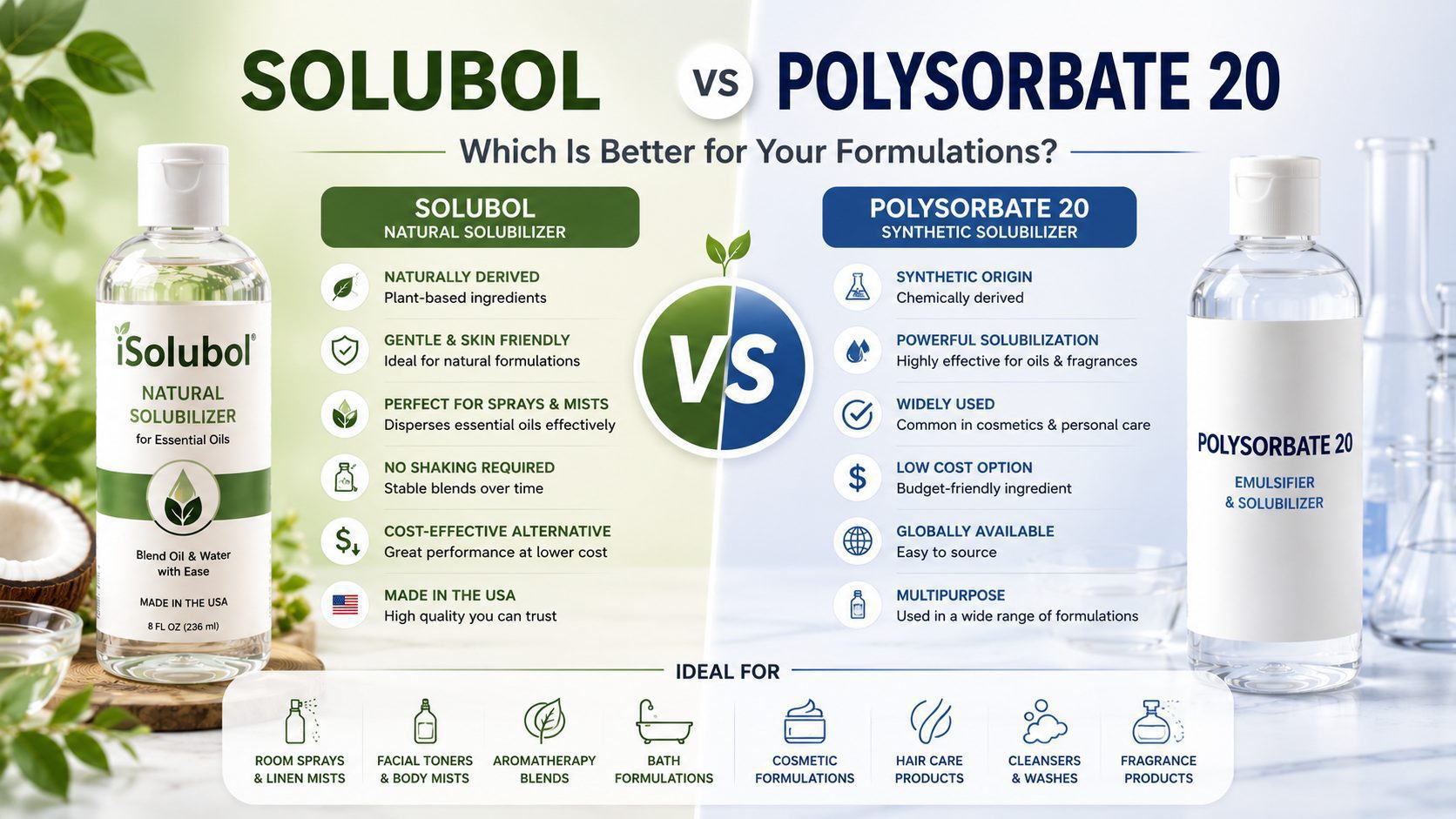
One of the biggest differences between the two products is their origin.
Solubol is generally marketed as a naturally derived solubilizer and is often preferred by brands focusing on natural or organic formulations.
Polysorbate 20 is produced through a chemical manufacturing process and is considered a synthetic ingredient by many clean beauty standards.
For brands targeting natural-conscious consumers, this distinction can be important.
Today’s consumers are paying more attention to ingredient labels than ever before.
Natural skincare and aromatherapy brands often choose Solubol because it aligns with the growing demand for plant-derived ingredients and cleaner formulations.
Polysorbate 20 remains widely accepted in the cosmetics industry, but some consumers actively seek products formulated without synthetic surfactants.
Both ingredients can effectively disperse essential oils into water-based formulations.
Polysorbate 20 is known for its strong solubilizing capabilities and can often produce very clear solutions.
Solubol also performs well in many aromatherapy and cosmetic applications while offering a more natural positioning.
The ideal choice often depends on the specific essential oils being used and the desired appearance of the finished product.
Solubol is especially popular in:
Polysorbate 20 is commonly used in:
Polysorbate 20 is generally one of the more affordable solubilizers available.
However, many formulators are now looking for alternatives that combine natural ingredient profiles with competitive pricing.
Products such as iSolubol have emerged as cost-effective solutions that provide the benefits of a naturally derived solubilizer while helping reduce formulation expenses.
If your primary goal is maximum solubilization efficiency and cost is the main factor, Polysorbate 20 may be a practical choice.
However, if you are building a natural skincare brand, aromatherapy line, or clean beauty product range, Solubol and natural alternatives such as iSolubol may better align with your brand values and customer expectations.
For products like:
A natural solubilizer is often the preferred option.
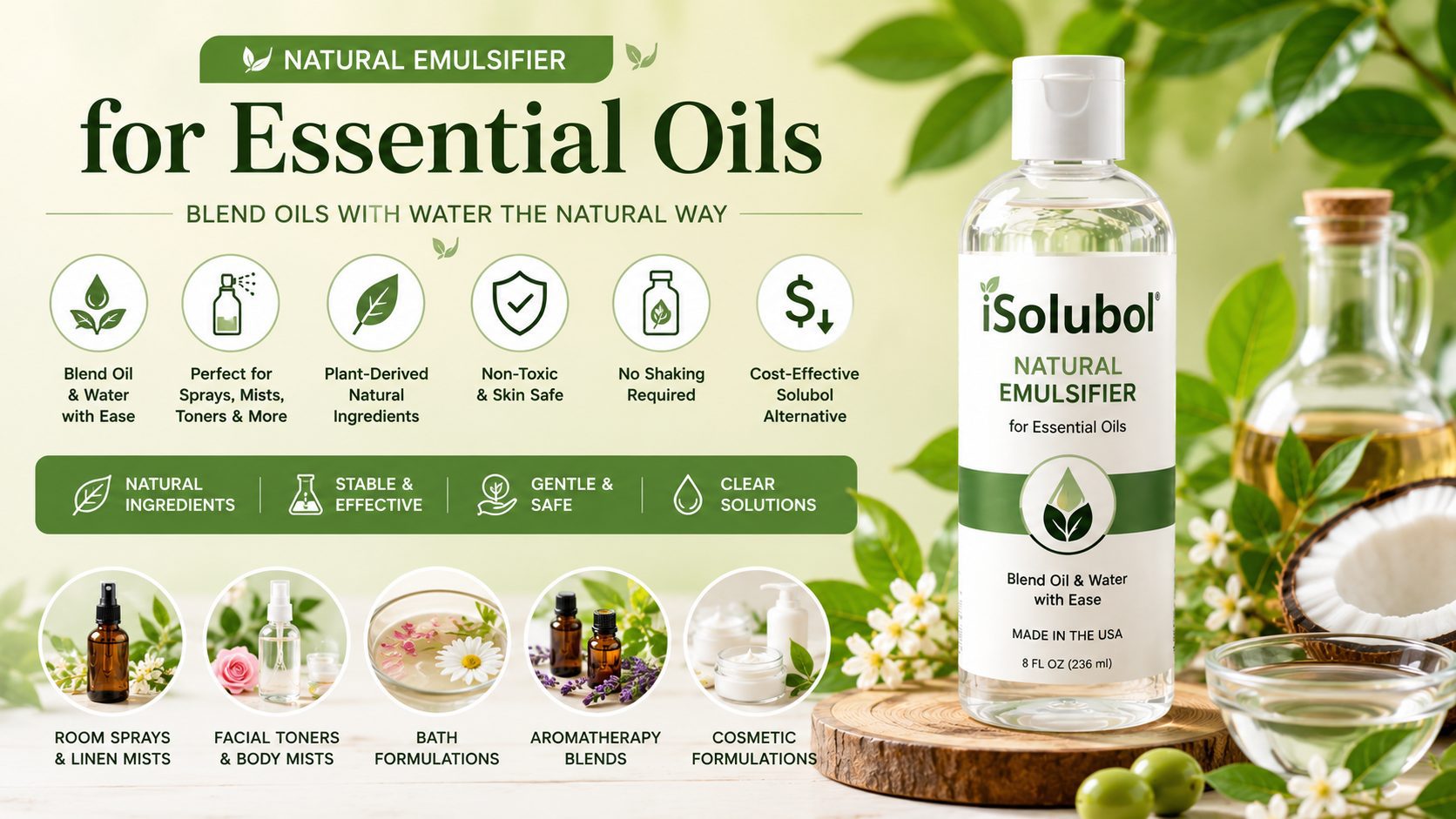
As the clean beauty market continues to grow, many formulators are actively searching for a Polysorbate 20 replacement that offers effective oil dispersion while supporting natural ingredient claims.
Natural solubilizers such as Solubol and iSolubol help bridge the gap between performance and consumer demand for plant-derived ingredients.
This trend is particularly strong among handmade product makers, wellness brands, and companies focused on sustainable formulations.
There is no universal winner in the Solubol vs Polysorbate 20 debate. Both ingredients are effective solubilizers with proven applications in cosmetic and aromatherapy products.
Choose Polysorbate 20 if you prioritize affordability, widespread availability, and strong solubilizing performance.
Choose Solubol or iSolubol if you want a more natural formulation, cleaner ingredient positioning, and a product that aligns with today’s growing demand for plant-derived personal care ingredients.
For many modern brands, the decision comes down to one simple question: do you want a synthetic solubilizer or a naturally derived alternative? As consumer preferences continue to shift toward natural products, more formulators are finding that natural solubilizers offer the best balance of performance, marketing appeal, and customer trust.


You must be logged in to post a comment.