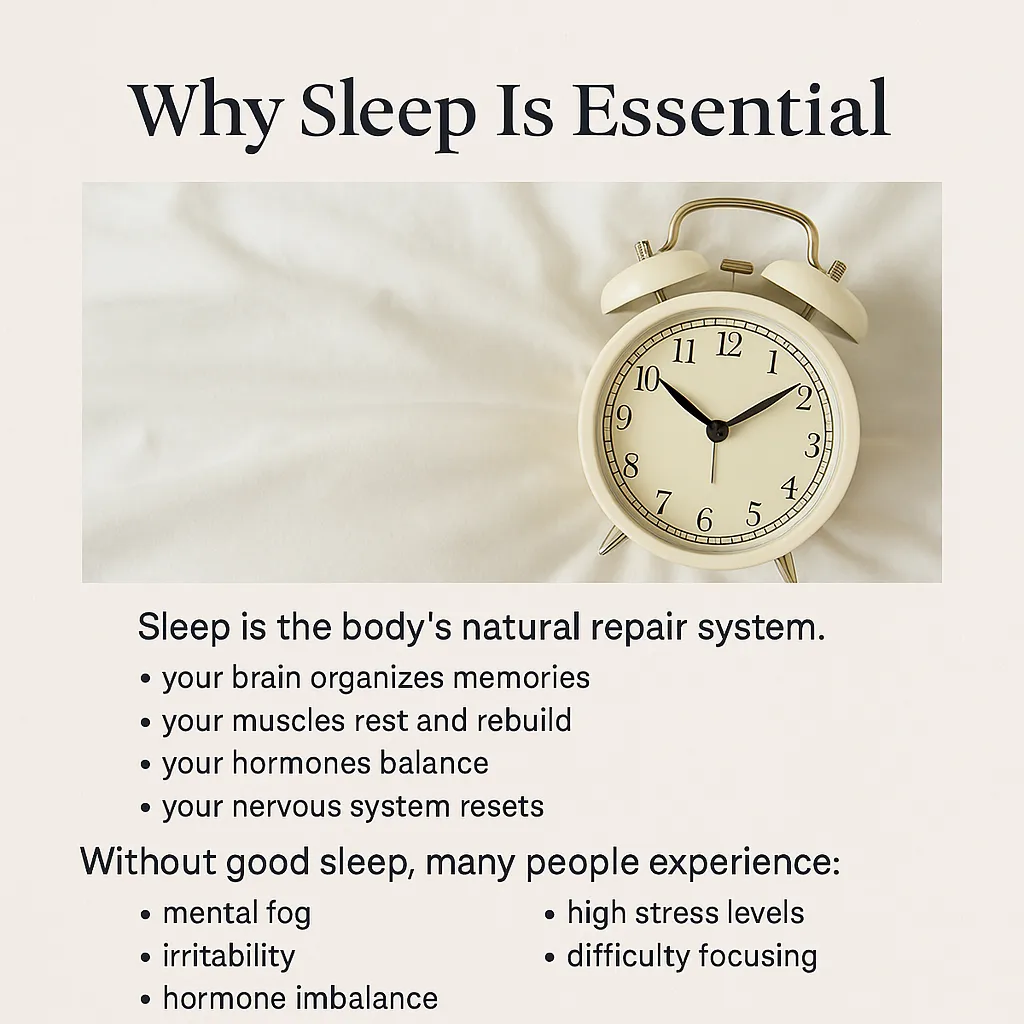
Sleep is the body’s natural repair system. During sleep:
your brain organizes memories
your muscles rest and rebuild
your hormones balance
your nervous system resets
Without good sleep, many people experience:
mental fog
irritability
hormone imbalance
weakened immunity
high stress levels
difficulty focusing
A healthy sleep cycle makes your mind clear, your emotions stable, and your body strong.
Sleep support simply means helping your body move into a calm, restful state.
Essential oils support this by:
relaxing the mind
slowing breathing
soothing the nervous system
reducing emotional pressure
Sleep support is a gentle way to prepare your body for natural rest.

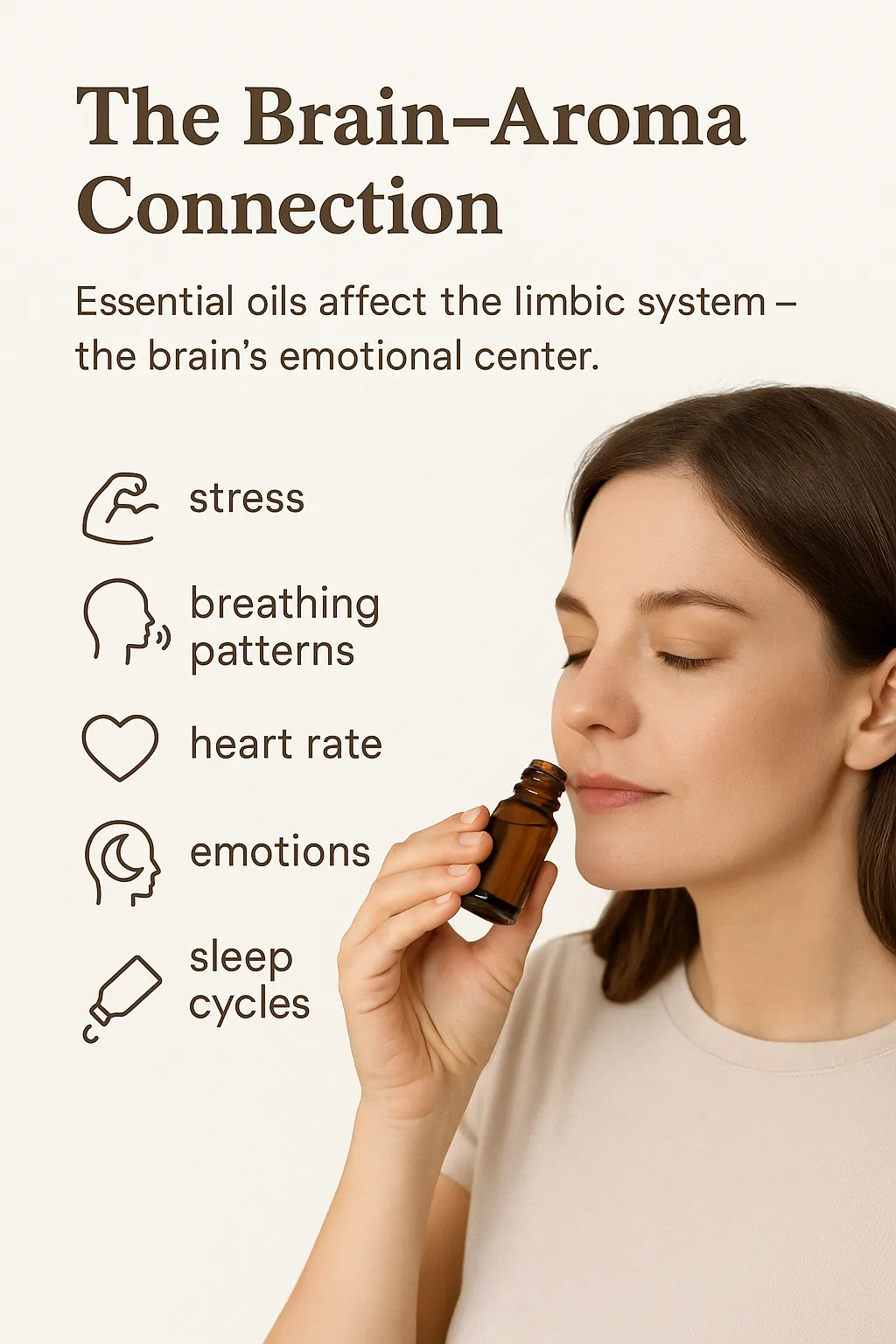
Essential oils affect the limbic system — the brain’s emotional center.
This area controls:
stress
breathing patterns
heart rate
emotional state
sleep cycles
When you inhale calming oils, the brain receives a signal to slow down, relax, and prepare for rest.
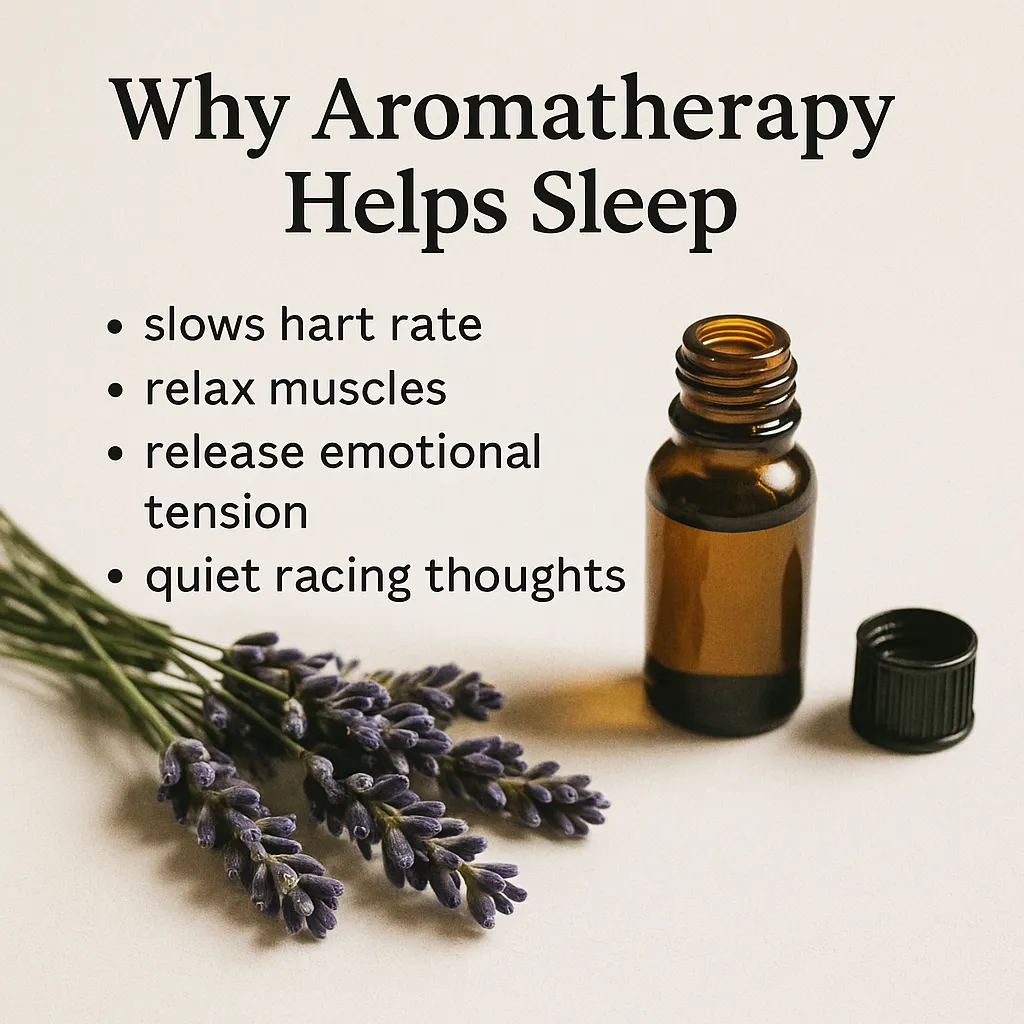
Essential oils work because they can:
slow heart rate
relax muscles
release emotional tension
quiet racing thoughts
support deeper breathing
This combination makes essential oils one of the simplest and most natural sleep tools available.
These essential oils are the most trusted, gentle, and effective for nighttime relaxation.
Lavender is the world’s most popular sleep oil.
It can:
reduce stress
calm racing thoughts
relax muscles
improve sleep depth
Science shows lavender increases slow-wave sleep — the deepest and most restorative stage.
Chamomile has a warm, sweet scent and is especially helpful for:
night-time anxiety
emotional tension
restlessness
soothing the mind
It is gentle enough for sensitive people and children (with proper dilution).
Bergamot is a calming citrus oil. Unlike other citrus oils, it is relaxing rather than energizing.
Benefits:
emotional balance
tension release
peaceful mood
stress reduction
Perfect for people who feel overwhelmed at night.
Cedarwood has a warm, grounding, woodsy scent.
It supports:
deep breathing
nervous system calm
mental stillness
emotional grounding
Especially helpful for people who wake up often during the night.
Clary sage is one of the best oils for hormonal sleep issues.
It helps:
relax muscles
calm emotional stress
support balanced mood
slow breathing
Excellent for people whose sleep struggles come from hormonal tension.
Sandalwood is soothing and earthy, ideal for meditation or quiet evenings.
Benefits:
deep relaxation
mind detachment from stress
steady breathing
peaceful atmosphere
Perfect for pre-sleep meditation or reflection.
Ylang ylang is sweet and floral.
It helps:
lower heart rate
reduce emotional pressure
calm feelings of overwhelm
support peaceful sleep
Use small amounts, as it is strong and very aromatic.
Calming oils shift the body from “fight or flight” into “rest and digest.”
This causes:
slower heartbeat
softer muscles
deeper breathing
mental quiet
This is essential for falling asleep naturally.
The limbic system responds instantly to scent.
Oils like lavender, chamomile, and sandalwood reduce:
emotional pressure
sadness
mental stress
night-time anxiety
This creates a strong sense of comfort and safety.
Certain oils help relax the muscles and improve breathing patterns.
This makes it easier for the body to shift into nighttime rest.
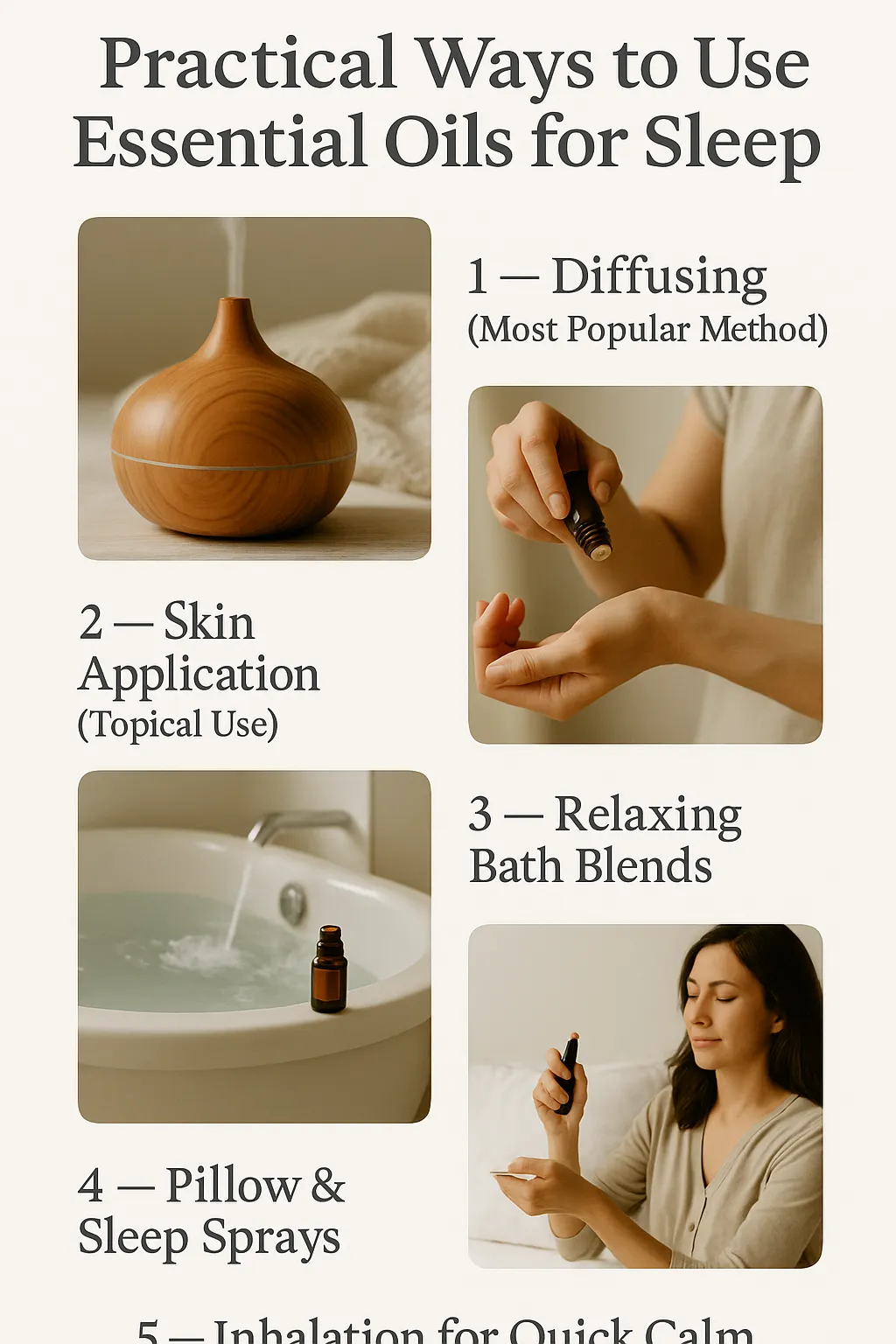
Add 4–6 drops of a sleep oil to a diffuser.
Best oils to diffuse:
lavender
chamomile
sandalwood
cedarwood
vetiver
Use 30 minutes before bed.
Always dilute essential oils with a carrier oil.
Dilution Chart:
| Purpose | Dilution | Drops per 1 teaspoon carrier |
|---|---|---|
| Face | 1% | 1 drop |
| Body | 2–3% | 2–3 drops |
Apply to:
wrists
chest
shoulders
back of neck
bottoms of feet
Warm baths calm muscles and settle the mind.
Simple recipe:
2 drops lavender
1 drop sandalwood
1 tablespoon carrier oil or milk
Soak for 15–20 minutes.
In a 50 ml spray bottle:
6 drops lavender
3 drops chamomile
water + witch hazel or alcohol
Spray on pillows, blankets, and bedroom.
Place 1 drop on a tissue.
Inhale slowly for 30–45 seconds.
This method works fast during sudden stress.
3 drops lavender
1 drop cedarwood
2 drops chamomile
2 drops bergamot
2 drops sandalwood
1 drop clary sage
Never apply essential oils directly to the skin without dilution.
Always patch test.
Safest oils for sensitive skin:
lavender
chamomile
Safe:
lavender
chamomile
Avoid in early pregnancy:
clary sage
Safe (low dilution):
lavender
chamomile
No. They support natural sleep but do not replace medical treatment.
Start diffusing 20–30 minutes before bedtime.
Yes! Blends often work better than single oils.
Use lightly, and ensure good airflow. Some pets are sensitive.
Use fewer drops or choose a lighter oil like lavender.
Yes. Essential oils are safe for nightly use when diluted properly.