

Natural essential oils are powerful plant extracts that carry concentrated scents, flavors, and active chemical compounds. For thousands of years, people have used them for healing, relaxation, beauty, and emotional balance. Today, essential oils remain popular because they work quickly, smell wonderful, and come directly from nature.
What Natural Essential Oils Are?
Basic Definition:
Essential oils are highly concentrated liquids extracted from plants. They contain the plant’s natural aroma and chemical compounds—these are what give each oil its unique scent and benefits. Lavender calms the mind because of its relaxing compounds. Peppermint feels cooling thanks to menthol. These chemicals are extremely strong—often more concentrated than the plant itself—meaning only a few drops are needed.
Essential oils are not the same as cooking oils like olive or coconut oil. Cooking oils are thick and greasy; essential oils are thin, watery, and evaporate quickly, which is why they are sometimes called volatile oils.
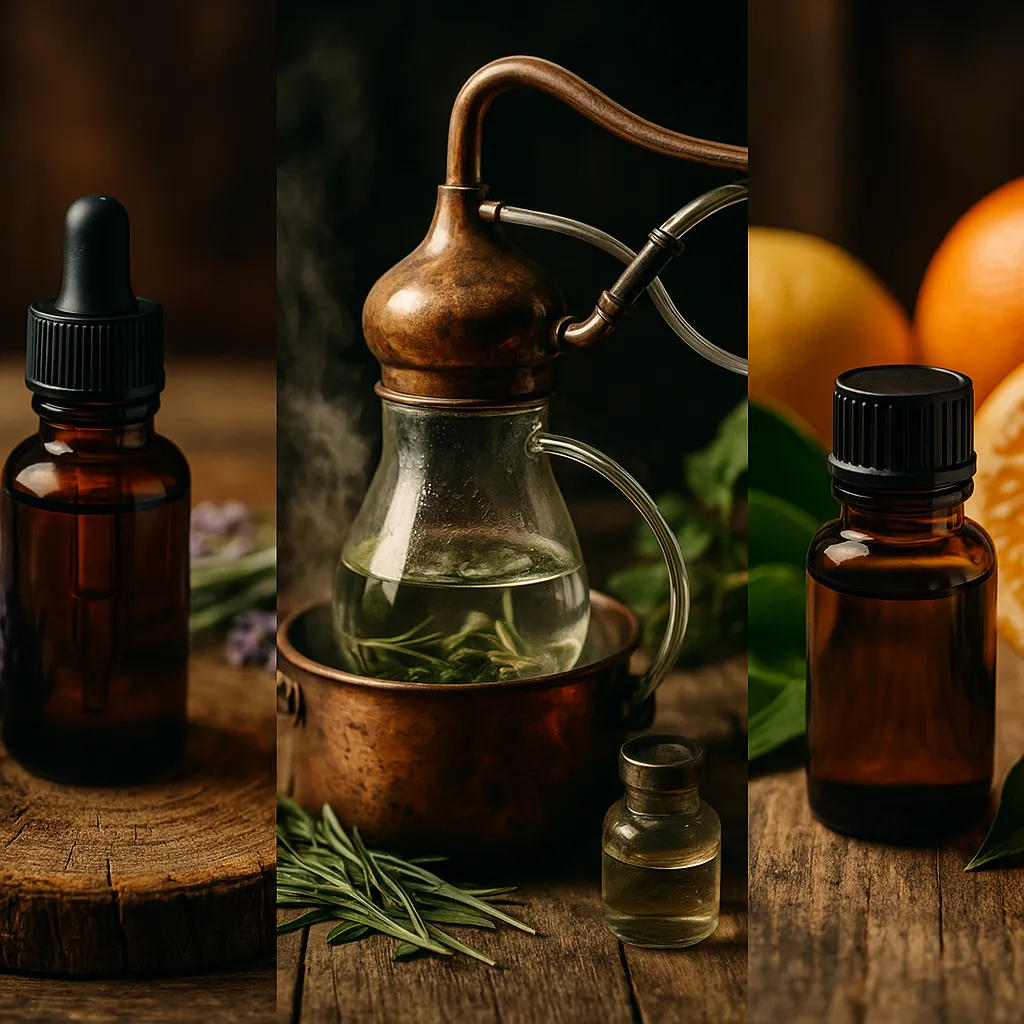
Where Essential Oils Come From?
Different plants store their oils in different parts:
-
Leaves: mint, eucalyptus, tea tree
-
Flowers: rose, lavender, jasmine
-
Bark: cinnamon
-
Resin: frankincense, myrrh
-
Roots: ginger, vetiver
-
Peels: orange, lemon, bergamot
Each part contains its own natural chemistry. Citrus peels, for example, contain limonene, which gives them a bright, fresh smell. Flower oils contain delicate molecules that help with emotions and relaxation.
A Short History of Essential Oils
Essential oils have been used for thousands of years:
-
Egyptians used oils in medicine, beauty, and rituals.
-
Indians used them in Ayurveda for natural healing.
-
Greeks studied oils for health; Hippocrates recommended scented baths.
-
Europeans used aromatic plants during plagues for protection.
-
In the 1900s, French chemist René-Maurice Gattefossé burned his hand and discovered lavender’s strong healing power—this began modern aromatherapy.
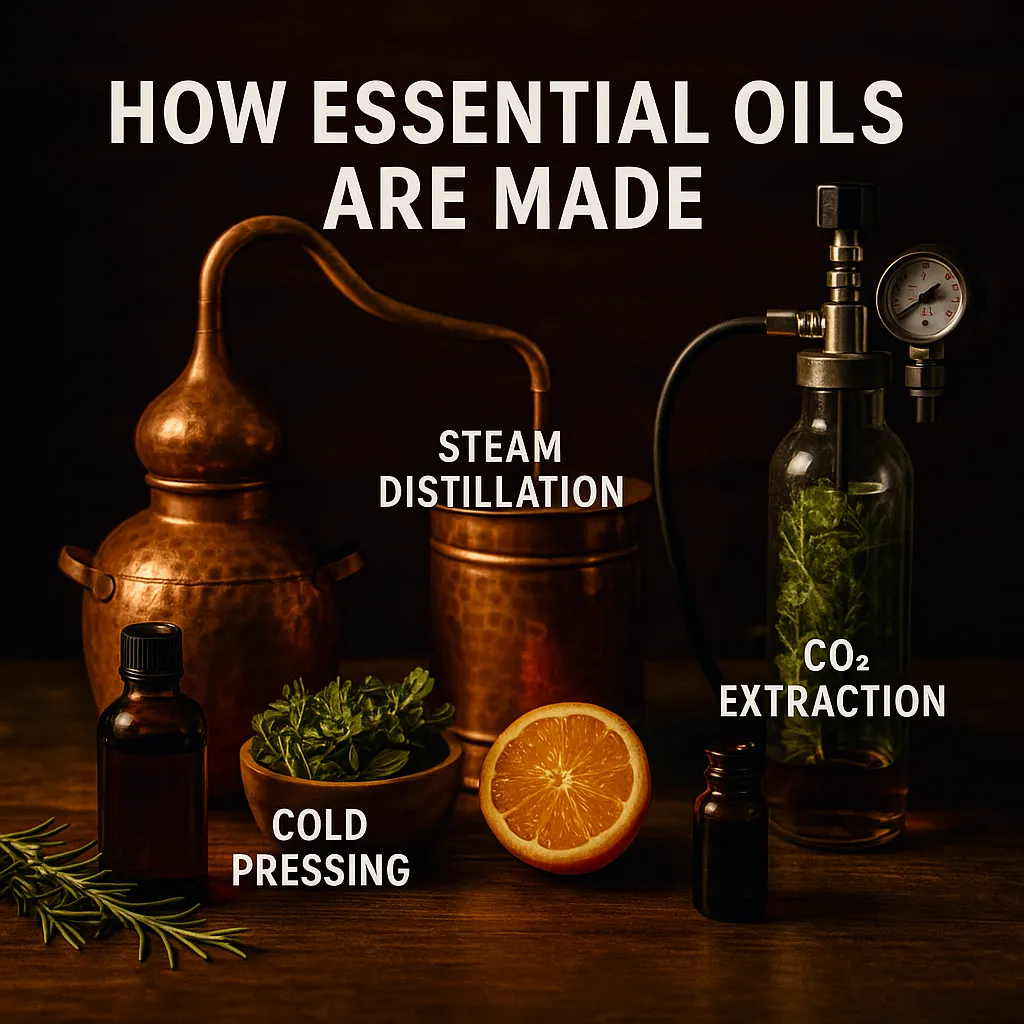
How Essential Oils Are Made?
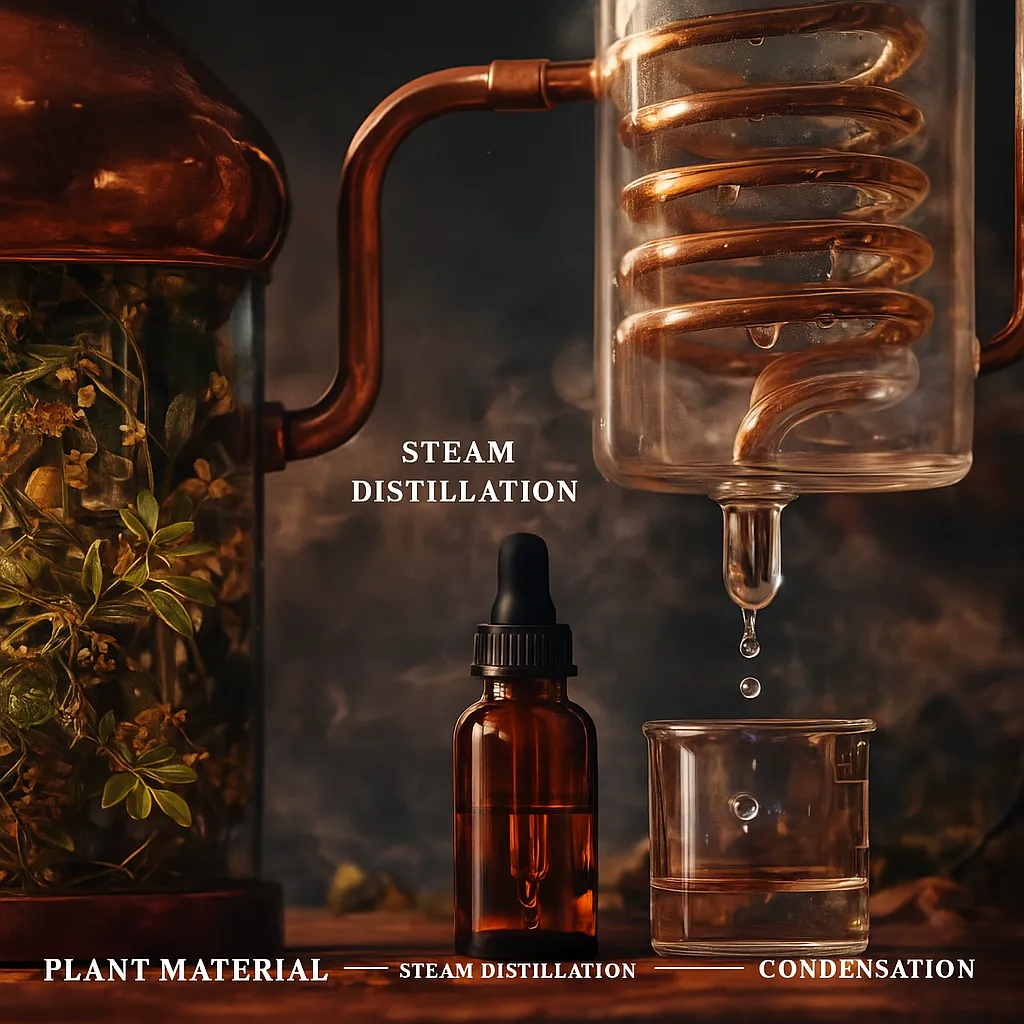
Steam Distillation
The most common method:
-
Plant material is placed in a still.
-
Steam passes through it.
-
Tiny oil glands burst.
-
Oil evaporates with the steam.
-
The vapor is cooled into liquid.
-
Oil separates from water and is collected.
Lavender, peppermint, eucalyptus, and hundreds of other oils are made this way.

Cold Pressing
Used mainly for citrus oils (orange, lemon, lime):
-
Machines press or scrape fruit peels.
-
Oil is released.
-
Oil and juice mixture is filtered.
-
Pure essential oil rises to the top.
Because no heat is used, the scent stays bright and fresh.
Solvent and CO₂ Extraction
Used for delicate flowers like jasmine or rose:
-
Solvent extraction uses a gentle liquid to pull out the fragrance.
-
CO₂ extraction uses pressurized carbon dioxide.
CO₂ extracts are very pure and smell almost identical to the fresh plant—perfect for perfumes and high-quality aromatherapy.
How Essential Oils Work in the Body
Chemical Structure and Absorption
Essential oils affect the body because their molecules are extremely small. They enter the body through:
-
Breathing
-
Skin absorption (with a carrier oil)
-
Very limited internal use (only when safe and approved)
After entering the body, they travel through the bloodstream and interact with cells, nerves, and organs.
Aromatherapy Effects
When you inhale an aroma, scent molecules travel directly to the limbic system, the part of the brain that controls:
-
emotions
-
memories
-
stress
-
breathing
-
heart rate
-
hormones
This is why scents can change how you feel almost instantly:
-
Lavender reduces stress
-
Peppermint increases focus
-
Orange improves mood
-
Eucalyptus helps breathing

Common Benefits and Uses
Essential oils are used for many natural benefits:
-
Relaxation: lavender, chamomile
-
Breathing: eucalyptus, peppermint
-
Skin care: tea tree, rose
-
Muscle relief: ginger, marjoram
-
Mood boosting: citrus oils
-
Home cleaning: lemon, pine
Examples:
-
Lavender in a diffuser helps with sleep.
-
Peppermint mixed with carrier oil relaxes tight muscles.
-
Tea tree helps keep skin clean.
-
Lemon oil freshens homemade cleaners.
Always dilute essential oils properly and use them safely.
Conclusion
Natural essential oils are powerful plant extracts with rich histories and many benefits. Whether used for relaxation, physical support, emotional balance, or natural cleaning, they bring the plant’s active compounds directly into daily life. With proper knowledge and safe use, essential oils can become valuable tools for well-being.
You must be logged in to post a comment.